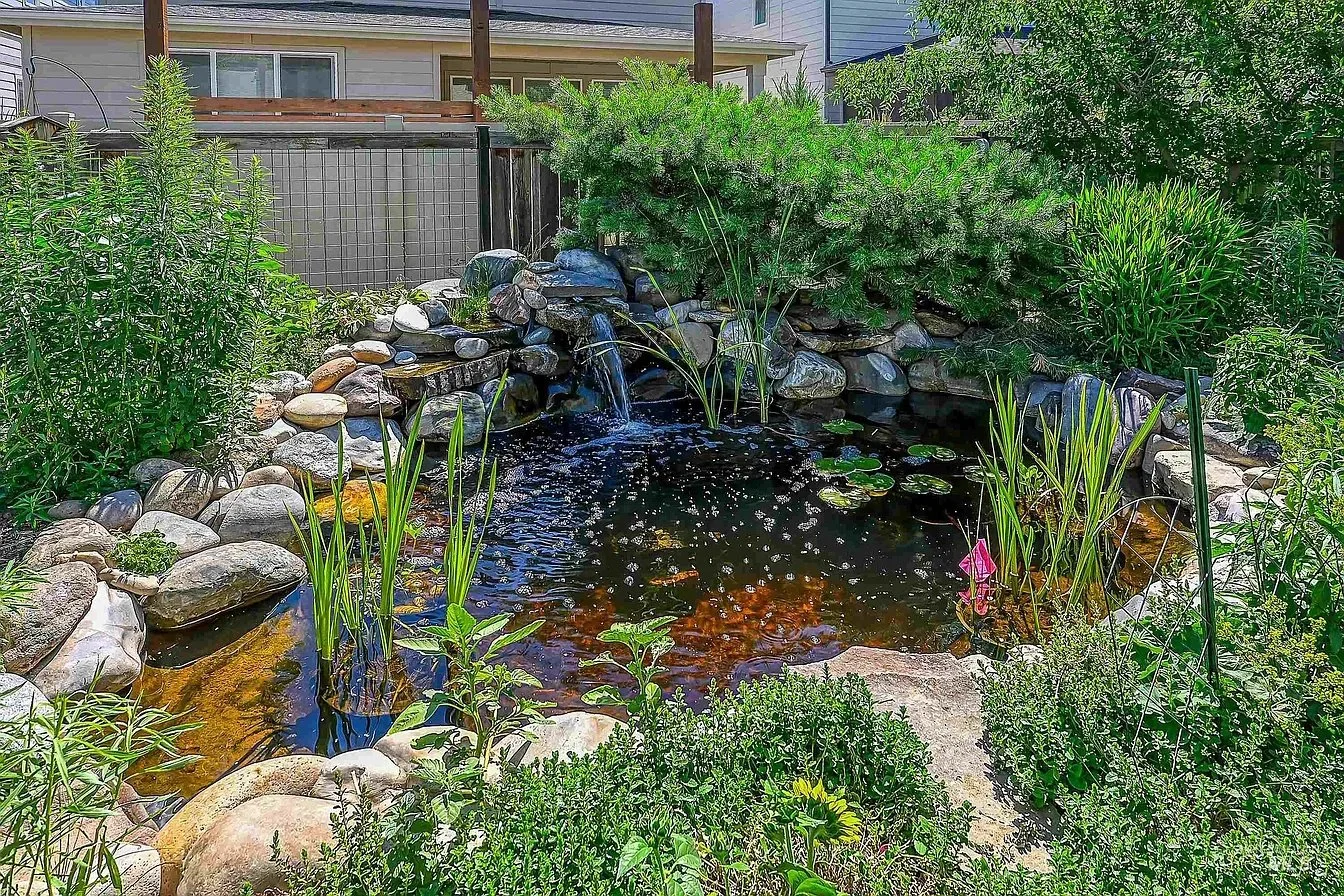
Matt & Kathy McCoy’s pond in Boise, Idaho
May 2026 President’s Notes—Water, Water Everywhere
by Matt McCoy

A Pacific Northwesterner might be forgiven for thinking southwest Idaho is a desert. Burnt brown stretching as far as the eye can see and nary a tree to be found. And going by the “less than 10 inches of annual precipitation” definition of a desert, parts of state are. Boise (its name derived from French explorers’ excitement at seeing les bois—the trees—along the Boise River after a brutal crossing of the Snake River Plain) is on the precipice of that realm, but at 11.6 inches of average annual rainfall, the city is not there yet. If you’re a firm believer in the rainshadow effect—and how else can you survive our winters—then it comes as no surprise that Sequim (16.9 inches of annual precipitation) is not all that different from Boise. A chance encounter with the Olympic Peninsula’s native brittle prickly pear cactus pointedly confirms that. Port Angeles’s annual 25.7 inches of precipitation is almost wet by comparison—until you remember that nearby the Hoh Rainforest and Forks receive more than 120 inches annually.
Water, regardless of where you are, is a big draw for wildlife and a must in the backyard. With the encouragement of friends willing to help dig a three‑foot‑deep hole and move a few tons of rocks, I went with the “go big or go home” philosophy of providing water for wildlife. A 1,000‑gallon‑plus main pond with three waterfalls, a smaller bog for filtering water (because of course there had to be koi), and a connecting stream were in order. (This was pre‑Kathy, so commonsense restraint was nowhere to be found.) Water lilies, iris, marsh marigold, and a variety of native plants—including monkeyflower, my favorite—collected from nearby roadside wetlands helped the oasis quickly spring to life. Not to be left out, birds brought their own plant selections, including cattails, which proved to be aggressive colonizers.
Main pond with primary waterfall (year-round) and pour-over waterfall to left. A diversity of perennials, some carefully planted and occasionally maintained (e.g., pine tree), others serendipitously spread after initial introduction (e.g, goldenrod, a pollinator favorite); a mix of aquatics (lily, yellow iris) including an early blooming marsh marigold for the bog; and sunflowers sprouted from bird seed that came and went as they pleased, a goldfinch favorite. Photo shared by Matt McCoy
Through the years, the ponds were a big hit with critters. Goldfinches and Cedar Waxwings loved frolicking in the shallow pour‑over waterfall (their very own infinity pool). Gourmand Great Blue Herons and Kingfishers appreciated the early koi offerings—and settled for the plebeian goldfish that replaced them. Not satisfied with my meticulous rock placements in the stream, raccoons felt compelled to periodically rearrange them in pursuit of invertebrate taste treats. A pair of Mallards annually used the main pond as a spring migration stopover for a month or two (cracked corn prepared them for the remaining journey). A pair that chose to nest there one year paid the ultimate price as a Cooper’s Hawk picked off the newly hatched ducklings one by one. Crevices between larger rocks provided a great hibernaculum for garter snakes that patrolled the ponds and surrounding yard (including the House Sparrow trap, which provided a unique feeding opportunity). Dragonflies and damselflies hovered over the surface to deposit their eggs.
Placed within easy view of your primary living spaces, ponds provide year-round wildlife viewing opportunities. Photo shared by Matt McCoy
Plant seeds weren’t the only hitchhikers birds brought in. Schistosomes, a parasitic flatworm that spends part of its life cycle with mollusks, also magically appeared. I was blissfully unaware of their presence until one day, early in our relationship, I asked Kathy to reset some of the plant pots in the big pond. It was a warm, sunny day, so wading in with just shorts and a tank top was a welcome break. Our error in judgment became readily apparent an hour or two later when, driving her home, she painfully counted the 70‑plus cercariae larvae that had mistaken her for a bird and bored under her skin. Swimmer’s itch is, unfortunately, a very accurate description. To her credit, she didn’t dump me then, but her subsequent relationship with the ponds was somewhat fraught (something I was regularly reminded of).
Like its native brethren in the Columbia, the great white salmon swimming upstream to spawn runs into an impassable barrier - a fenced exclosure, a required structure to head off wanton fun and mess. Left unchecked, cattails can dominate leading to rapid succession. Periodic burning is not an option. Photo shared by Matt McCoy
If you’ve ever dealt with plumbing, you know that water doesn’t always go where you want it to. Garden water features are no different. Not only do animals (especially golden retrievers) love ponds, but so did adjacent upland plants that eagerly dipped their roots into the water. Vegetation and debris regularly formed dams, noticeable when the pond level dropped precipitously over a few hours. Thirsty plants, capillary action, and evaporation are among the ways water defies gravity and inflated our water bill. Drinking and bathing are year‑round wildlife needs, so we kept the main waterfall running through the winter, when available water was particularly scarce for wildlife. Constantly changing ice sculptures were a beautiful aesthetic for us—despite the fear that one night the surface would completely freeze over and the pump would drain the pond before burning out.
Spa day. We had to be reminded that a retriever and water are inseparable. Rio quickly found the bog and enjoyed a self-administered mud treatment. Photo shared by Matt McCoy
A large water feature can be a wonderful backyard addition both wildlife and you will enjoy, but it will require regular maintenance. As you’ve waded through these narratives, you’re no doubt wondering if I’ll ever move on from Boise and begin work in our Port Angeles yard. Fear not—we’re getting started, and with any luck, we’ve learned something from our past experiences that will help guide those efforts.