
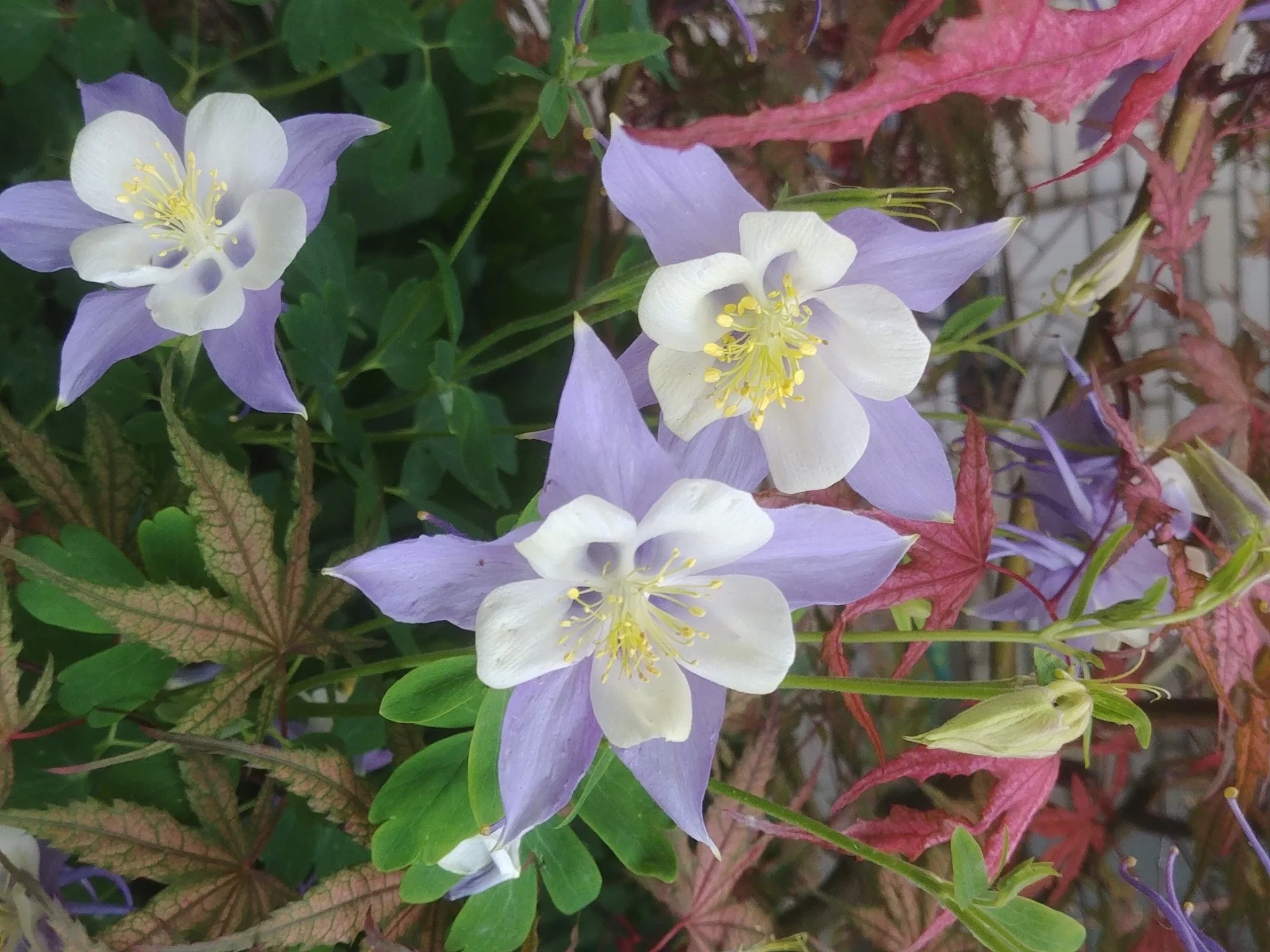
Columbine flower—Photo Matt McCoy
April 2026 President’s Notes – Proper Prior Planning…
by Matt McCoy

Kathy and I are well aware of the 7Ps adage. Actual adherence to the adage is another story altogether. We have rare flashes of compliance, but by and large we are planning‑challenged. I moved into my Boise house in 1993; Kathy joined me in 2000. That gave me a head start on landscaping, which provided ample time to make mistakes without her guidance.
I started with a standard suburban Boise yard—lawn, a border of big‑box‑store shrubs with a black‑plastic/red‑lava‑rock understory, and a six‑station sprinkler system. Two birch trees out front provided some structural diversity, but like everything else, water‑wise choices were not considered in the landscaping scheme. Working on a limited budget, I attempted to improve wildlife habitat one step at a time. I was torn between native, low‑maintenance plants and exotic favorites that brought me joy. Fragrant roses required water and maintenance, but I had to have them—a nod to childhood.
Pre‑planned, mostly native garden selections from High Country Gardens were an easy early choice, especially with the lure of beautiful pictures of grown‑out gardens (sans the disclaimer that actual results might vary, and your garden probably won’t look as nice). That “garden” evolved over time as more aggressive yarrow pushed coreopsis to the edges. Fringed sage flourished for a few years, then faded away. The newly installed drip irrigation needed periodic modifications in a vain attempt to favor desired plants, not unlike a dog chasing its tail. The neighbor’s lawn‑sprinkler overspray and spreading cherry tree ultimately had the biggest impacts, providing far more water and shade than my original plantings needed.
That’s about where planning stopped and serendipity took over. The Native Plant Society held annual spring plant sales that had a Black Friday vibe—people lined up before the opening gun, then madly dashed about snapping up any and every plant as fast as they could. Initially, I focused mostly on bare‑root shrubs, following a plant‑slow‑growing‑things‑first strategy. Caught up in the frenzy, my eyes were bigger than my yard, and I usually came home with more plants than I needed. The shrubs usually had six inches of roots and a single eight‑inch stem. They looked so small and forlorn when planted that I ignored what they might look like at maturity and planted like I was trying to fill a Volkswagen to maximum capacity. Grow they did—usually faster than expected—so I could soon see the error of my ways, if not learn from it. The birds didn’t seem to mind much, although they probably would have appreciated more understory plantings.
Plant sources were everywhere: Indian ricegrass “rescued” from around a stock‑water tank; incredibly fragrant purple sage from along a gravel road; bluebunch wheatgrass and squirreltail seeds spilled during fire‑rehabilitation efforts; Thurber’s needlegrass seeds collected from a remnant stand (twice‑geniculate awns are cool); and arrowleaf balsamroot rehomed before bulldozers arrived to plant more homes. Animals and neighbors also helped. Golden currant and Oregon grape thoughtfully planted by birds were keepers; cherries, not so much. The neighbor’s quaking aspen was lovely and a great hummingbird perch, but its quest for water was relentless as it crept under the fence and through our yard, and of course there were native forbs from the plant sale. Wyeth’s buckwheat planted next to the driveway was a particular favorite. After arriving home from work, I could relax and marvel at the diversity of wasps and bees that clamored over its tiny flowers.
Kathy’s appearance on the scene did little to change my process. Spring appeared each year with the promise of a fresh start. Maybe this year we would be disciplined. We would only get the plants we absolutely needed from the nursery. Sadly, that resolve evaporated after the first few steps into the nursery. Everything looked beautiful. Like kids in a candy store, we wanted one of everything. Usually, our bank account tempered that desire a little, but we still came home with twice as many plants as needed and no idea where to put the extras. Plant tags, little grave markers from previous failed experiments, provided some ideas. Invariably, we shoehorned plants in and modified the drip system to accommodate them.
While critters were quite happy with our efforts, we were sometimes frustrated by our Boise yard’s haphazard evolution. Trying to learn from these misadventures, we’ve vowed that we won’t be fooled again as we move forward with converting our current yard. Time will tell, but if history is any indication…