
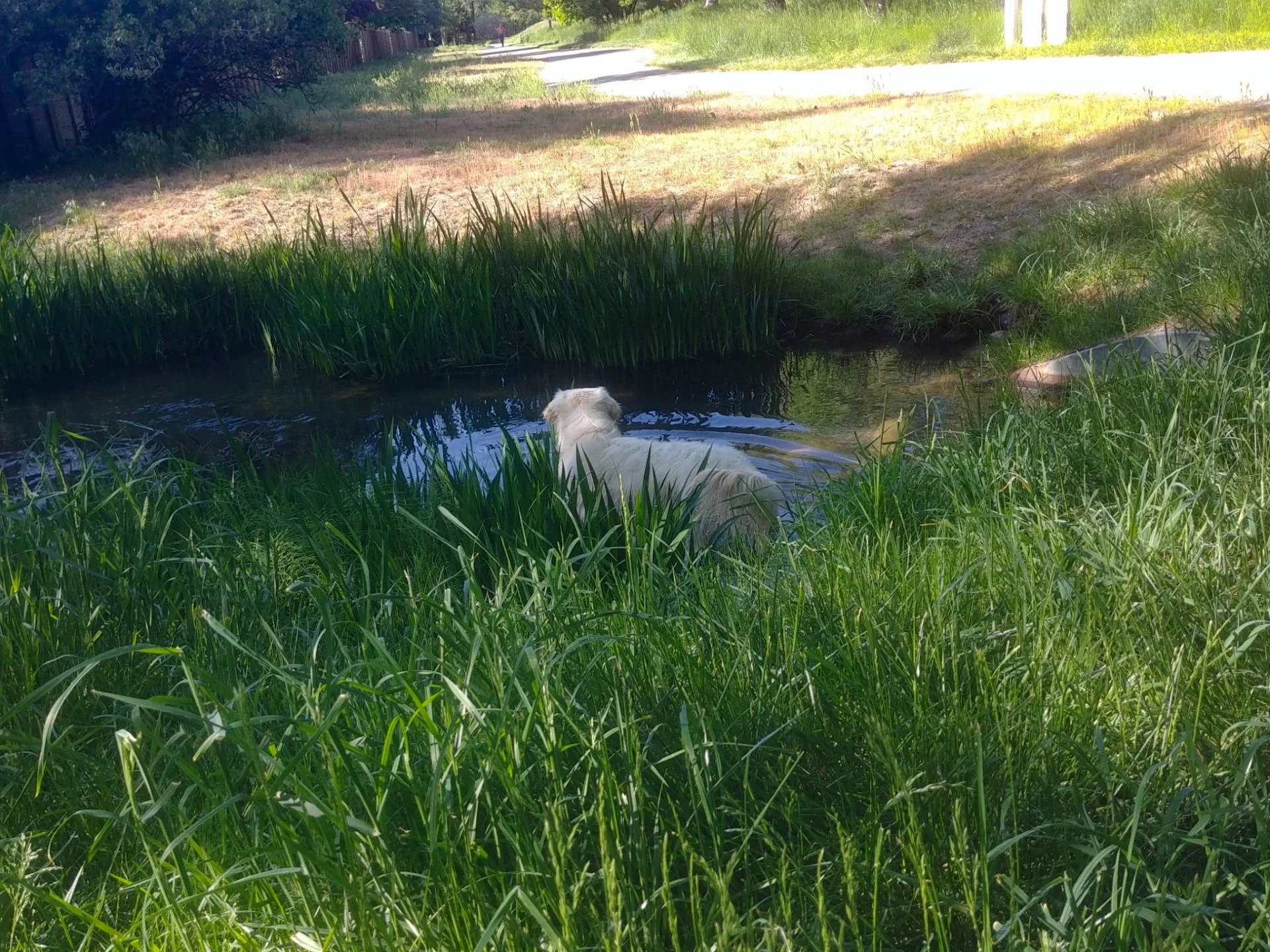
Rio standing in irrigation ditch—Photo: Matt McCoy
June 2026 President’s Notes—A Different Kind of Irrigation Festival
by Matt McCoy

In the West, irrigation water followed the plow, ensuring several decades of agricultural productivity that often ended with a final crop of subdivisions and strip malls. Although irrigation canals snaked through our Boise neighborhoods, access to that water was hit or miss depending on whether a subdivision developer had paid attention to the details. In our case, the developer didn’t, which meant we paid for irrigation water we couldn’t actually access (failure to pay could result in foreclosure and sale of your property—our own “whiskey’s for drinking, water’s for fighting” paradigm). One silver lining: our dogs could access the canals, so at least they got a return on our investment on hot summer days.
With three Boise River dams and more than 1,000 miles of irrigation canals and ditches, Idaho’s Treasure Valley should be fertile ground for an irrigation festival celebrating the area’s annual spring greening. Sadly, no—no parades, no floats, no music, no trashion show. Residents are left to their own devices to welcome the water. Those of us who paid for city water to grow things generally weren’t in a celebratory mood, especially when the bill arrived. A green yard was our quiet celebration and, unlike on the Olympic Peninsula, green was the preferred yard color through the summer.
To save precious water and eliminate lawn, I converted a standard six‑station sprinkler system to drip lines soon after moving in. The system might have worked well if I had bothered to convert the entire yard to xeric plants, or at least ones with similar water requirements. Instead, I used an eclectic landscaping approach—water‑loving plants on the same station as drought‑tolerant ones, sometimes even adjacent to each other. Roses and a birch tree that liked deep watering, or at least regular 30‑minute drinks, were paired with desert shrubs that required little, if any, watering once established. Tulips among native grasses—why not. The result was less than satisfactory, a fact Kathy regularly brought to my attention.
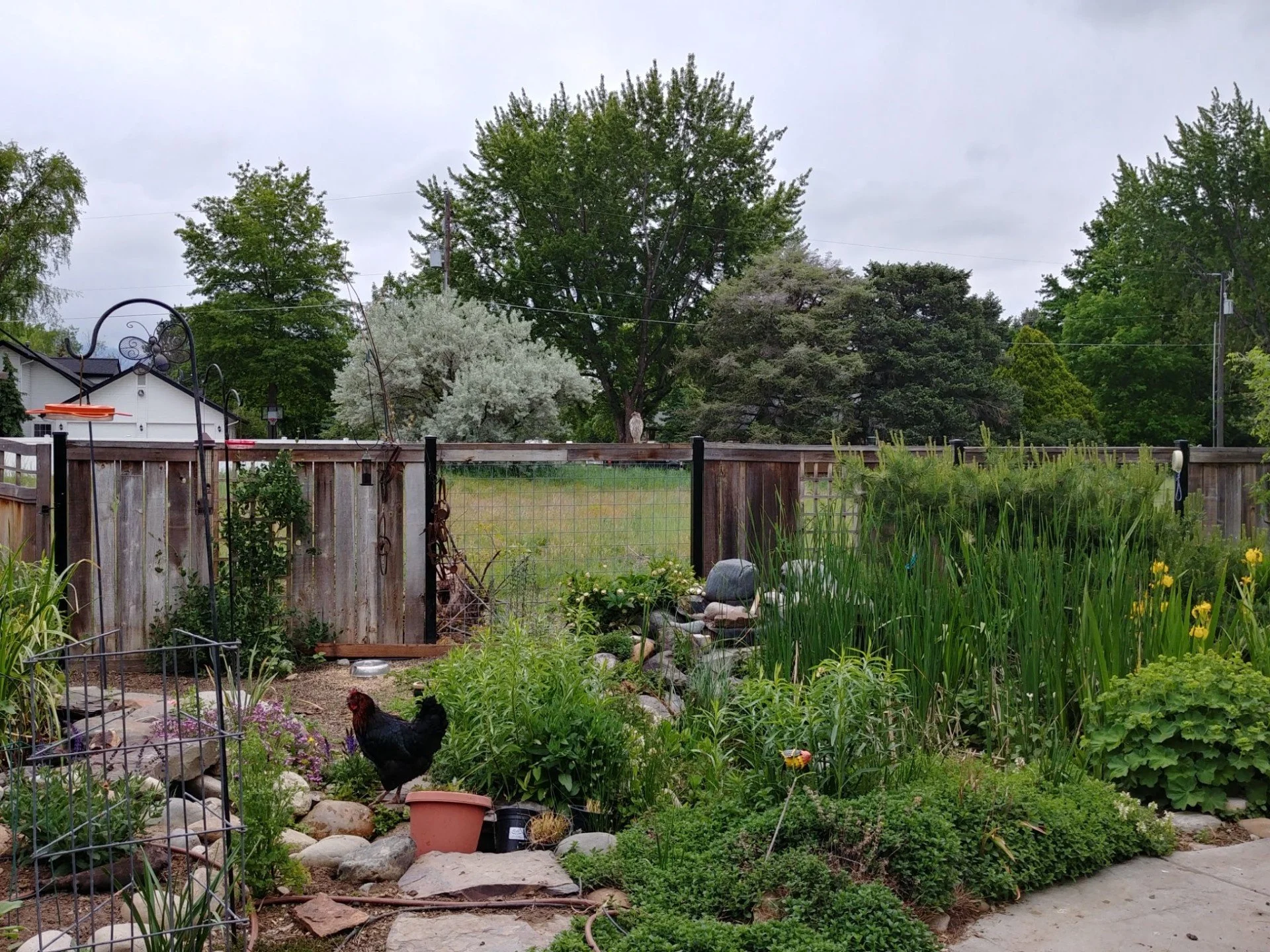
Drip irrigation lines installed in Boise yard—Photo: Matt McCoy
We turned on our drip irrigation system in May and were invariably rewarded with enough leaks to rival a Yellowstone geyser basin (which seems appropriate, as the Yellowstone caldera passed through our neighborhood 13 million years ago). Kathy danced about the yard marking leaks with pin flags—her own Swan Lake ballet—while I attempted to read and operate the controller (a skill neither of us came close to mastering until the invention of Bluetooth—there’s an app for that too!) and keep her from getting too wet. Post‑christening, she broke out the fix‑it kit and spliced, replaced, plugged, and rejiggered as necessary to stem the leaks. Invariably, we were missing key parts, resulting in regular pilgrimages to the big orange box store and other purveyors of suburban irrigation supplies
The system needed regular tweaking and maintenance throughout the season. Newly acquired plants rarely matched the water needs of the dearly departed ones they were supplanting. Often, the planting shovel and an overzealous gardener would find hidden feeder lines just below the surface—a surgical mishap revealed the next time the lines came on. Worn‑out parts needed replacing. Thirstier plants required regular supplemental watering in the summer. As with many labor‑saving devices, labor was generated, not saved.
Our Olympic Peninsula system of clouds, rain, and the general acceptance of brown summer lawns is a welcome reprieve. There is the occasional hose hauling, but plenty of time for relaxing—and even attending a festival recognizing professional irrigators.