
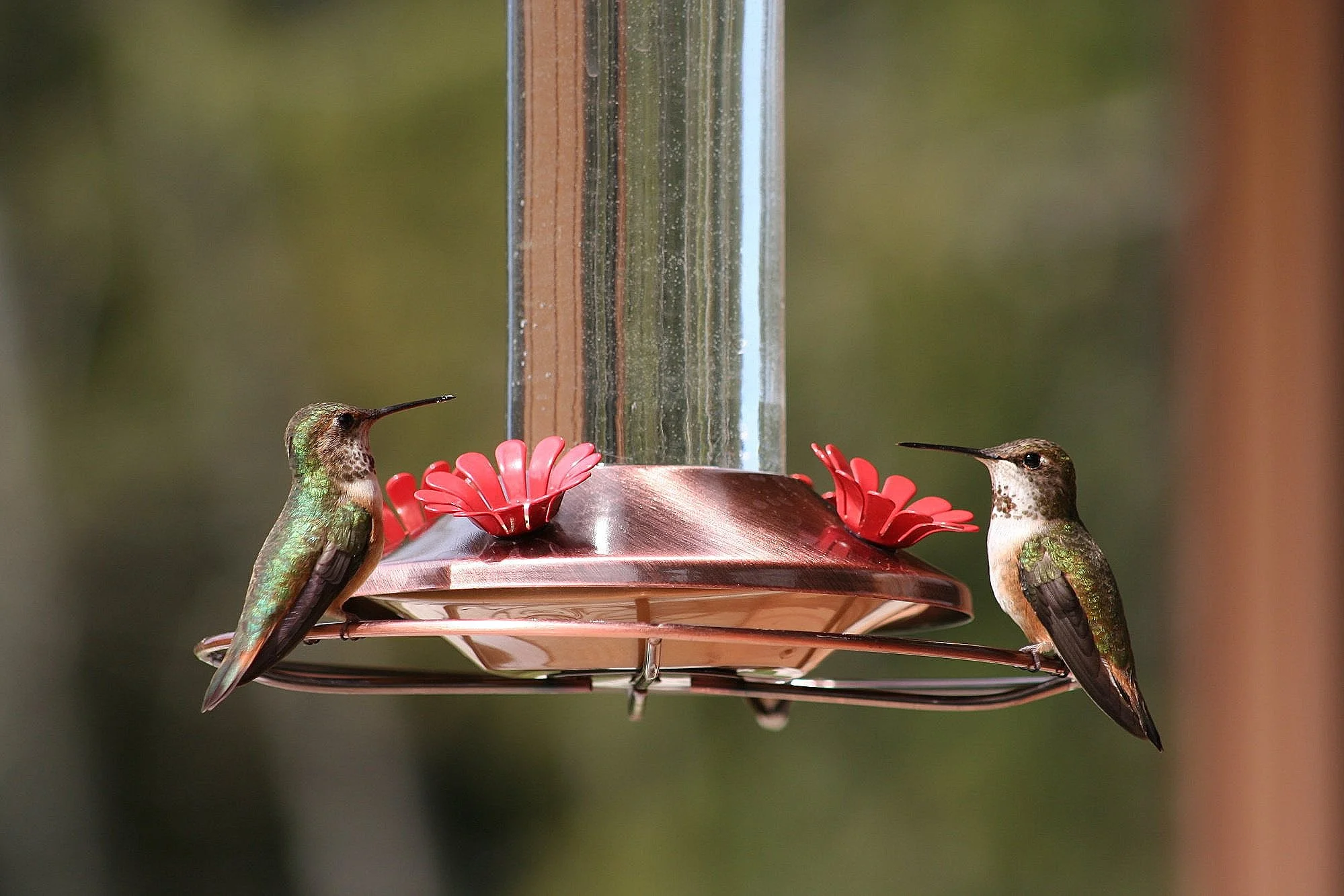
Rufous Hummingbirds on feeder—Photo: Dow Lambert
July 2026 President’s Notes—Wizardry Behind the Scenes
by Matt McCoy

The Wizard of Oz has many iconic scenes and important lessons. (On a personal note, the traumatic flying‑monkeys scene delayed my foray into birding for years.) Among them is Toto’s reveal of the wizard—the man behind the magic. OPAS is fortunate to have many wonderful wizards (not the blustery kind) who work their magic quietly behind the curtains to keep our organization going. Please join me in thanking three who are stepping back a bit for well‑deserved breaks.
In 2011, Marie Grad wanted to learn more about birds when she was welcomed into our nest through the Wednesday bird walks at Railroad Bridge. She found a friendly, understanding, and helpful flock—both feathered and unfeathered—that helped her birding knowledge take off. The friendships and knowledge Marie gained led to gratifying personal growth. She found many ways to give back to the OPAS community, including serving as co‑vice president, field trip chair, and representative on the Dungeness River Nature Center Board. With her new‑found freedom, Marie plans to hit the road for new birding adventures and family visits.
Mary Porter‑Solberg began volunteering for OPAS shortly after moving to Sequim in 2003. She has served in many roles with the chapter. While her current title is Webmaster, her passion has always been conservation. Like the heroes on the SS Minnow (sorry for these ancient references), Mary volunteered for a temporary trip as Newsletter Editor in 2024. Her three‑hour tour turned into a three‑year stint, during which she took the bimonthly newsletter from hardcopy to a monthly, fully digital version in her first year. After years of managing the website, the newsletter, Eventbrite, and more, her back finally said, “Enough sitting!” Handing off the newsletter and Eventbrite will allow Mary time to hike, watch and enjoy wildlife, and savor more uninterrupted cappuccino moments.
Despite what you may have heard, Ken Wiersema did not start OPAS in the late Cretaceous period! However, he was in on the ground floor of backyard birding classes, beginning to offer them when the Audubon Center was just a shell. In 2011, the Being a Backyard Birder (now Backyard Birding) team began offering nine classes a year. The series was “intended for anyone interested in knowing more about the birds seen locally each season of the year, as well as learning how to make their homes good habitats for wild birds.” In the intervening years, thousands have learned everything under the sun about backyard birds. Ken most appreciated the people he encountered along the way—both presenters and attendees—who shared his enthusiasm for all things birds. He is stepping down from coordinating Backyard Birding but charges on with other education programs and, of course, providing homes for wayward Purple Martins.
Ken birding during the Cretaceous period
June has also been a month for nature’s magic. Baby birds abound as Mother Nature unleashes her annual spring restocking effort to recover from losses over the past year. Our yard was there to help. Although our habitat may be subpar, at least 15 species made it work for brood‑rearing, if not nesting (maybe half that if we looked really hard).
Anna’s Hummingbird fledglings were among the first to arrive. One would camp on our window feeder every morning while a parent hovered nearby to ensure an uninterrupted drink. A couple of Rufous Hummingbird families joined them (though rarely at the same feeder, of course). Their flashy colors in the morning sun are brilliant. Hummingbird numbers have dropped off some as a multitude of natural food sources lured them away.
A Downy Woodpecker family was particularly enjoyable. The parents visit our suet feeders and trees year‑round, and they likely nested in the Douglas‑fir in our front yard. From there, the fledglings take a short glide to the suet feeder, where Mom and Dad pick bits off to stuff into their waiting mouths. If the youngsters aren’t up for the commute, the folks bring suet chunks back to the tree. This cutie even made a solo trip to join us for dinner, spending ten minutes searching for insects in the chair weave and wondering where the parental units had gone.
Downy Woodpecker fledgling—Photo: Kathy McCoy
Courtship begins early in the year for our unCommon Ravens, and we often see them sharing quality time atop nearby cottonwoods. Their nest isn’t far off, and they’re relatively inconspicuous during brooding. That all changes when the young fledge. The raucous youngsters explode across the neighborhood, excitedly telling Mom and Dad about all the neat things they find. The cherry tree across the street—though it struggles to support all six birds—is particularly fascinating, and they just can’t wait for the cherries to ripen. While technically songbirds, raven tunes might fit more into the heavy‑metal headbanger realm.
Violet-green Swallows are among the last to hatch. Their nestbox is right outside our bedroom door. We awaken to early morning chittering from the box assuring us that their folks are busy keeping our insect populations at a manageable level. The kids have not fledged yet, being quite happy to get breakfast in bed. All this activity meant a very productive and enjoyable spring in our yard. Hopefully, these youngsters will go forth and multiply.