
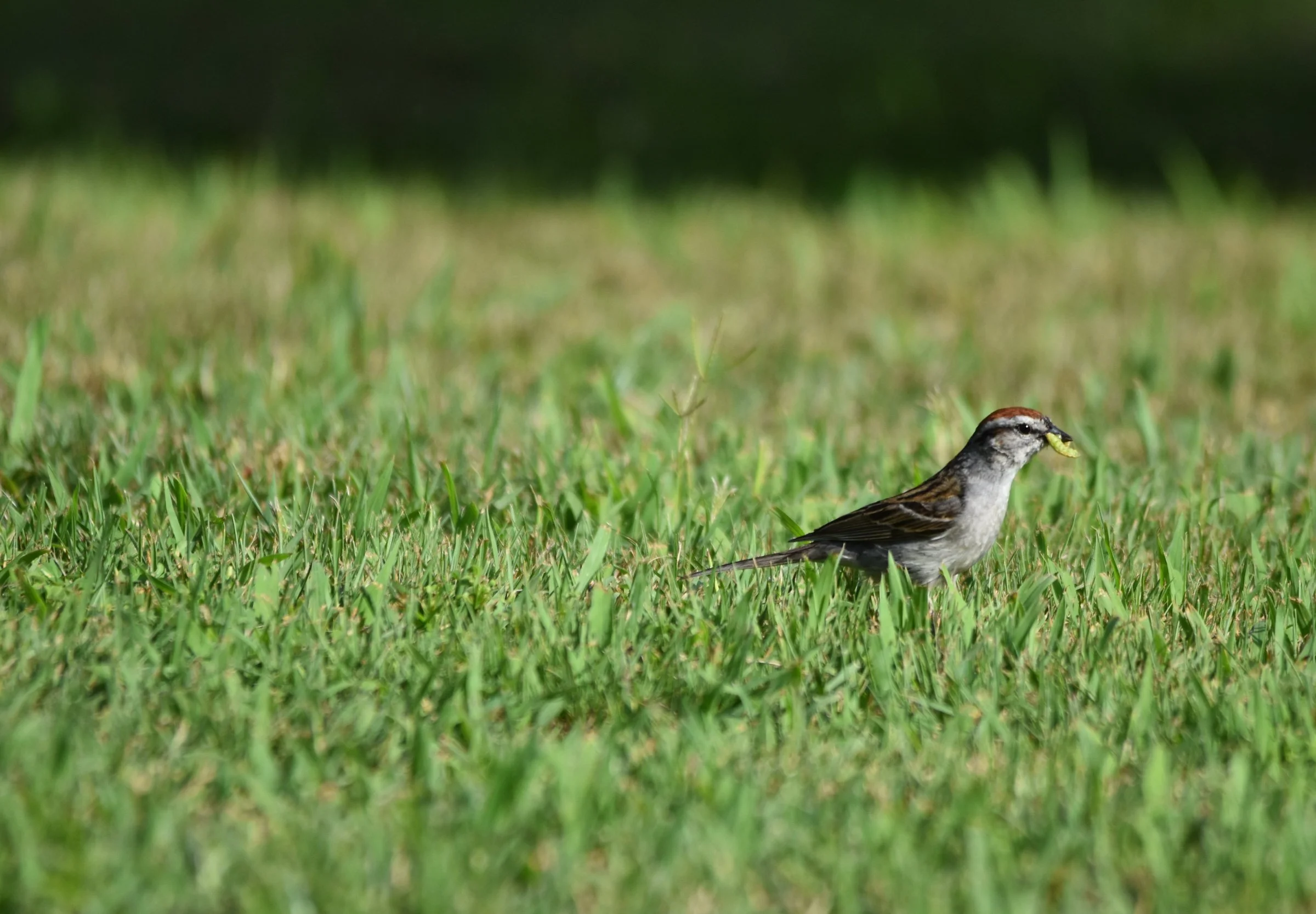
Chipping Sparrow—Photo: Devin Coble/Audubon Photography Awards
April 2025
World Migratory Bird Day Proclamations and the State of Bird Conservation
by Joyce Volmut

Introduction: World Migratory Bird Day highlights the urgent need to protect birds and their habitats. In recognition of this cause, the Conservation Committee requested, and the OPAS Board approved, that the City Councils of Sequim and Port Angeles proclaim May 10 as World Migratory Bird Day. These proclamations are a step toward raising awareness about the challenges birds face and inspiring action.
City of Port Angeles Proclamation: On March 18, Kate Dexter, Mayor of Port Angeles, presented the first proclamation during a City Council meeting. Mayor Dexter remarked, “It is a very timely proclamation.” She further shared a personal anecdote: her son is writing a school report about dark skies and observed that the city lights in Port Angeles are too bright to see the stars. This story underlines the interconnectedness of environmental issues that affect both humans and wildlife.
City of Sequim Proclamation: The Sequim City Council has approved the second proclamation, which will be presented at their meeting on April 28. OPAS members are encouraged to attend this important event to show their support.
Why This Matters: Birds face an extreme time of crisis due to environmental challenges. Policies and institutions that protect birds, such as the Environmental Act, National Parks, and funding for conservation science, are under threat. Educating the public on these issues is crucial.
The decline in bird populations continues. According to the 2025 edition of the State of the Birds report:
Western Forest Birds: Declined by an additional 11%
Shorebirds: Down by 33%
Grassland Birds: Plummeted by 43%
Dr. Amanda Rodewald, faculty director at the Cornell Lab of Ornithology’s Center for Avian Population Studies, notes, “The rapid decline in birds signals the intensifying stressors that wildlife and people alike are experiencing around the world because of habitat loss, environmental degradation, and extreme weather events.” She emphasizes, “When we see declines like those outlined in the report, we need to remember that if conditions are not healthy for birds, they’re unlikely to be healthy for us.” (See Figure 1 that depicts the Long-term Population Trends for America’s Birds)
Figure 1. Long-term Population Trends for America’s Birds
Hope and Economic Significance: As Dr. Jeff Walters, Conservation Committee Co-Chair at the American Ornithological Society, states, “There is no doubt that the 2025 State of the Birds report is cause for alarm, but it is also cause for hope. Public interest in birds and the economic benefits from birding are at unprecedented levels, as is the information available about the status of each and every one of our bird species.”
One hundred million people or 1/3 of the population, are bird watchers according to the 2022 publication of Birding in the United States: A Demographic and Economic Analysis by the U.S. Fish &Wildlife Service. The report also highlights the economic significance of bird watching and lists certain key economic factors:
$108 billion: Total spending on birding trips and equipment
1.4 million jobs: Supported by birding-related activities, generating over $90 billion in labor income
$38 billion: Tax revenue generated by birding activities
$279 billion: Total annual economic output from birding expenditures
Conclusion: Bird conservation is not just a pressing ecological issue, it is a matter that impacts communities, economies, and future generations. World Migratory Bird Day and the efforts of OPAS aim to educate and inspire action. Join us in supporting policies and initiatives that ensure a brighter future for birds and for us all.