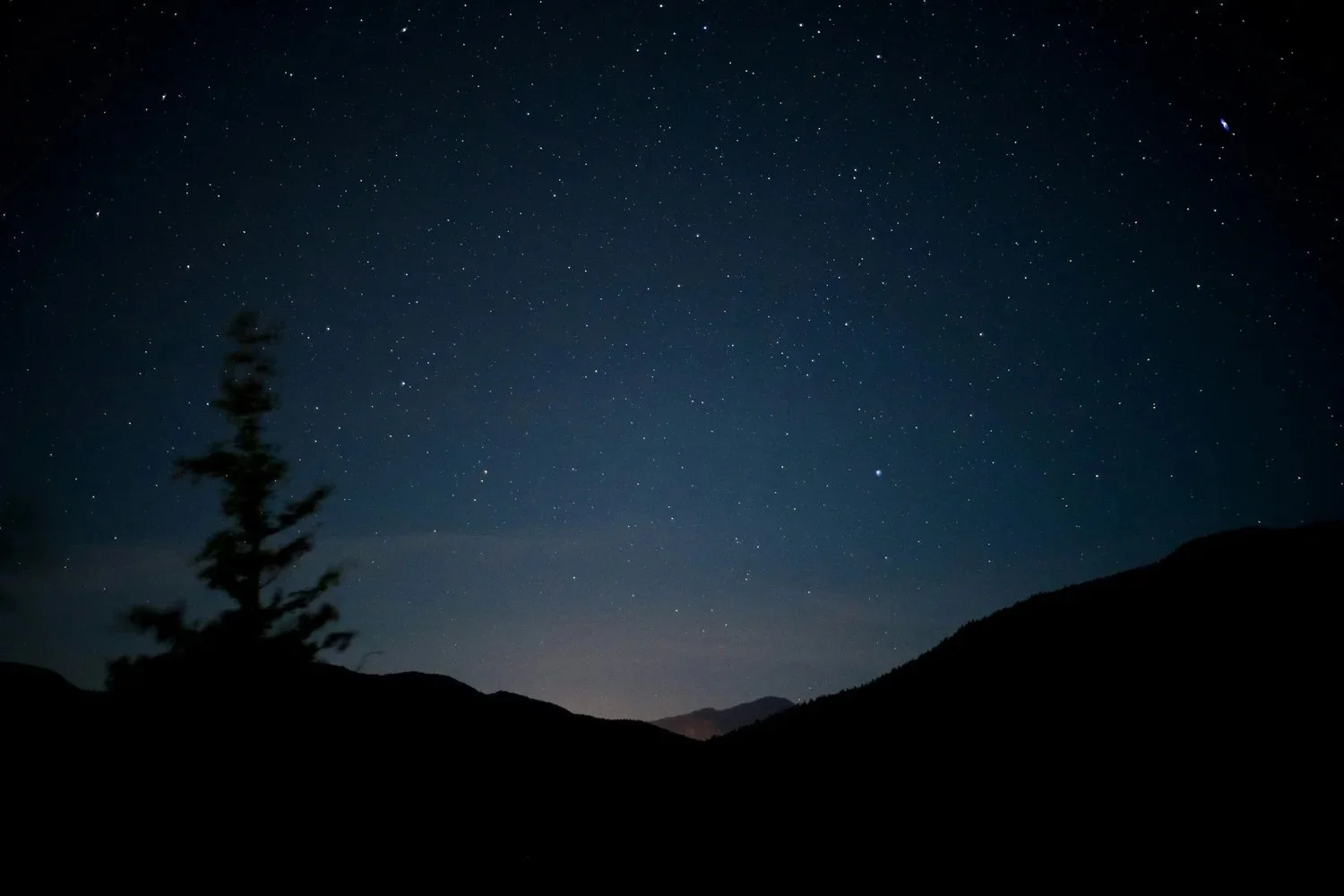
Night sky—Photo courtesy of Unsplash
August 2025
The Importance of Dark Skies for Birds and People
by Bob Phreaner

The OPAS Conservation Committee sets annual goals. For 2025-26 we are proposing that OPAS collaborate with DarkSky Olympic Peninsula. By collaborating with DarkSky, OPAS hopes to educate the public about the harm outdoor lighting can do to birds, especially when migrating. Bright lights cause confusion in birds causing them to go off course, collide with windows or fly in circles until they are exhausted. Each year 600 million birds are estimated to die in collisions with buildings in the United States.
However, we can reduce the harmful impacts of lights by turning them off at critical migration periods. One example is the bright beams above the National 9/11 Museum & Memorial’s Tribute in Light in New York City attracts up to 150 times more birds during migration. The museum now uses Cornell’s BirdCast to detect dense flocks and dim the lights.
Minimizing outdoor illumination saves energy and migrating birds. Light pollution is also a driver of declines in insect populations which impact birds and pollination of plants, so critical to a birds survival. Learn how light pollution impacts backyard birds.
Every year our forests grow quieter and our dark skies brighter. There are things that can be done to reverse this trend. Please join the DarkSky International Olympic Peninsula Chapter at 10:00 a.m., August 9 in the Rainshadow Hall of the Dungeness River Nature Center for a two-hour journey into one of the most urgent yet overlooked environmental issues of our time—light pollution. Speaker Wayne Gosnell, co-founder of Blanco County Friends of the Night Sky, will share how one Texas community sparked a movement and how we can do the same. RSVP here.
A good introduction to the impacts of dark skies is The End of Night by Paul Borgard. Several years ago the OPAS Conservation committee met virtually with Mary Coolidge of Portland Bird Alliance (formally Portland Audubon) to hear how individual home owners can help reduce light pollution. A link to her Back to the Night: The Case for Dark Skies Youtube presentation can be found at the end of this article but here are her best practices for home lighting:
use downward facing light fixtures
use fully shielded fixtures
limit total brightness
choose warm light (<3000 K)
use motion detecting light fixtures
use dimmers
Click on the video below to see how New York City and Portland, Oregon are using BirdCast to protect migrating birds.