
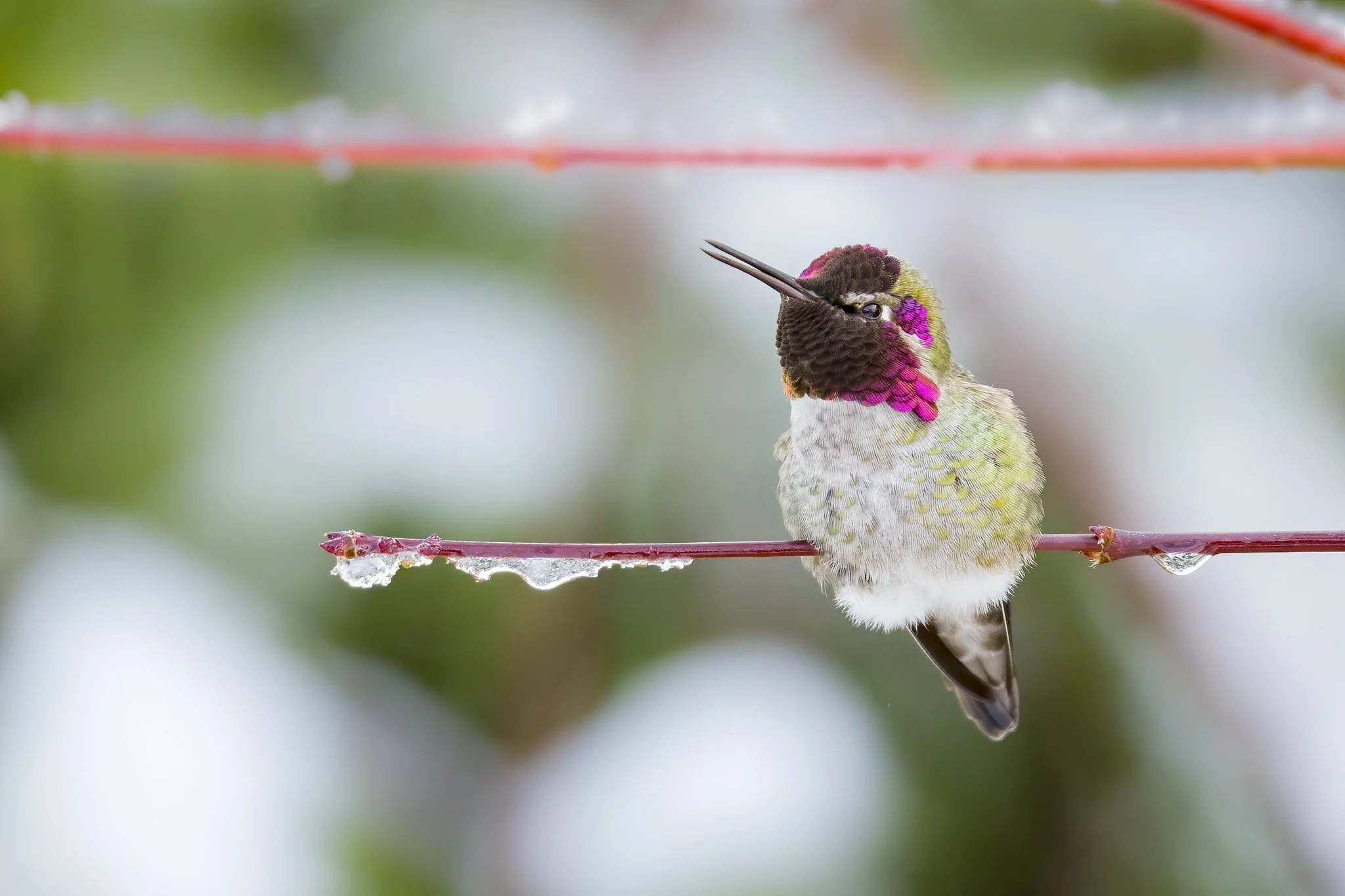
Anna’s Hummingbird in winter—Photo: Mick Thompson
Helping Our Wintering Birds
by Katja Bridwell

Because of our mild climate and diverse habitats, many birds remain in the region year-round rather than migrating. These resident species continue to rely on essential resources—food, water, and shelter—and some, like Anna’s Hummingbirds, may even begin nesting as early as January. While weather is always unpredictable, recent years have become increasingly erratic, adding stress to wildlife across the area.
Depending on the species, birds rely on insects, seeds, fruits, and nuts for food. They also need clean water, and shelter becomes especially critical during the winter months. With our changing climate adding stress, there is much we can do to help:
Leave areas unraked. Plant debris provides essential overwintering habitat for insects (and even some amphibians).
Delay dead-heading until spring. This may mean some plants will spread in the garden more than you desire (think plant swaps), but the seeds can feed birds well into winter and hollow plant stems are used for over-wintering insects. Also, extra vegetation provides shelter opportunities.
Keep brush piles. These “habitat piles” provide shelter for birds, small rodents (which in turn feed birds), and insects. Larger piles can even shelter mammals such as opossums. Hummingbirds may nest in them, use them for cover, and hunt insects there. Burning piles destroys not just habitat, but lives.
Retain stumps, logs, and downed wood. These natural features support habitat for insects and small birds.
Offer roosting and nest boxes. They provide safe shelter during cold weather.
Consider supplemental feeding. Extra food can be critical during freezing conditions.
Keep water accessible. Birdbaths may freeze in winter—thaw them regularly so birds can drink.
Plant native species. Winter berries from beautyberry, dogwood, viburnum, hawthorn, and mountain ash provide food, while trees add shelter.
Support Anna’s Hummingbirds. Provide clean nectar in feeders, bring them indoors overnight to prevent freezing, or use heaters. They depend primarily on insects, which become scarce in freezing weather, and nectar is unavailable. Habitat piles help, but feeders can be a lifeline—especially in the early morning when hummers emerge from nighttime torpor (a lowered metabolism that conserves heat and energy). Provide clean nectar, bring feeders indoors overnight to prevent freezing, or use feeder heaters.
Enjoy your wintering birds!