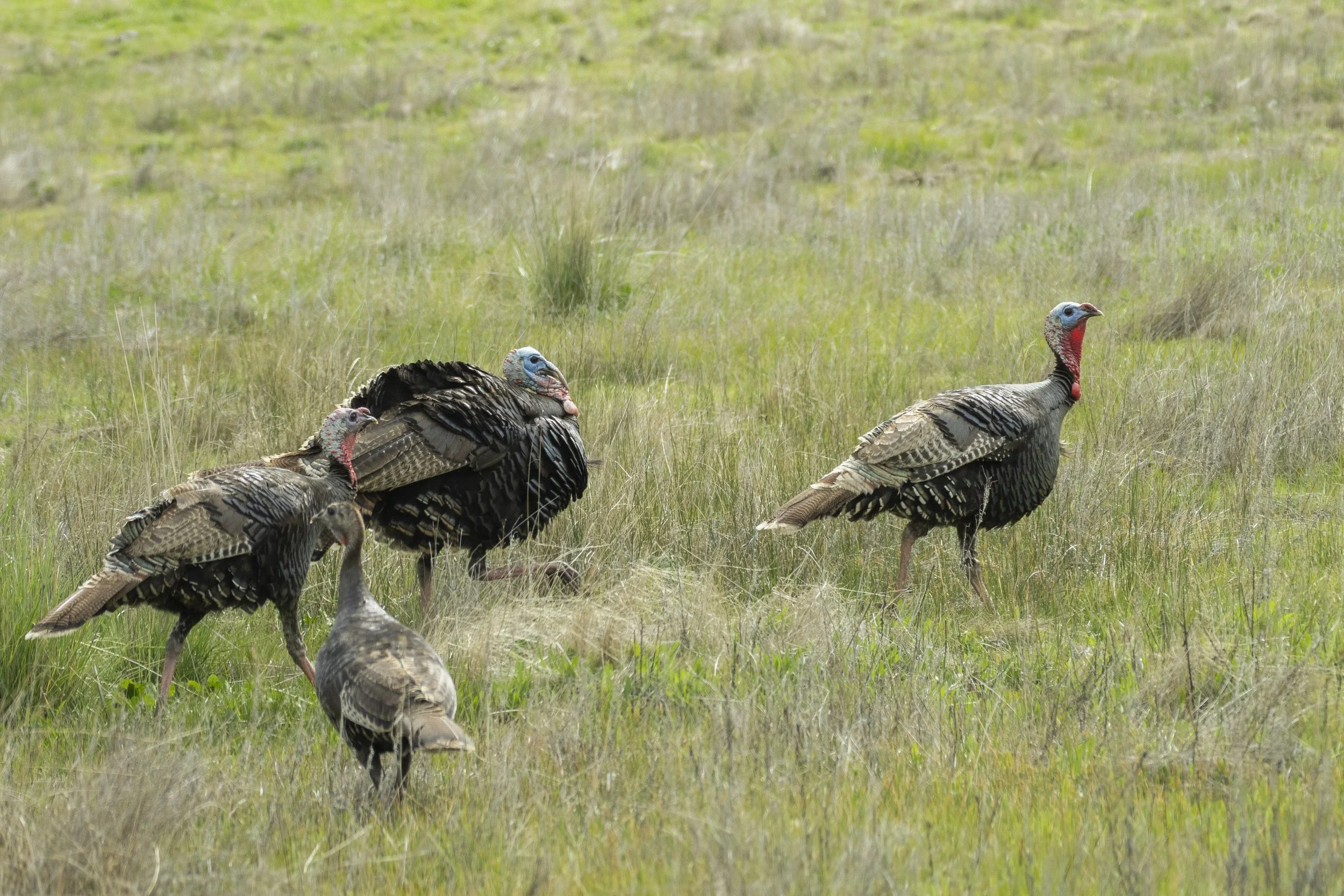
Wild Turkeys—Photo: Sydney Walsh/Audubon
December President’s Notes: A Question of Balance
by Matt McCoy
Wild Turkey—not just a bourbon, but a bird we can enjoy in the field and on our tables (perhaps with a bourbon in hand, if you’re so inclined). Can we both watch and eat a bird? It’s a dilemma we likely don’t give much thought to in our post-Thanksgiving, tryptophan-induced haze. If pressed, we could find compelling reasons for either choice: “I love birds too much to eat them,” or “I’m hungry, therefore I eat.” Yet deeper reflection reveals hidden costs—carbon footprints, industrial farming, concentrated animal feeding operations—with some degree of overlap no matter what we choose.
The bottom line is that there is no such thing as a free lunch, though we can try to get closer to one. We’ve been wrestling with that conundrum on the global stage as we try to quench our thirst for energy while limiting the damage of producing it. Every choice means a tradeoff. How clean is clean energy? Are wind turbines that kill birds and bats an acceptable price to pay to reduce greenhouse gases, or can better siting, operational changes, and new designs minimize that toll? And how do we transmit energy from where it’s created to where it’s needed without sacrificing the landscapes we’re trying to save?
Congress is wrestling with that last question right now as it considers the Bipartisan American Affordability and Jobs Act (S. 5653)—or, as I read it, the Plunder Public Lands So Americans Can Watch Cute Puppy Videos and Make Fossil Fuel and Tech Moguls Even Richer Act. The cynics who named this 417-page bill—apparently with the help of focus groups—clearly hoped that packing bipartisan, American, affordability, and jobs into the title would keep people from wading through pages of dry technical edits (striking periods, inserting semicolons) that disguise sweeping rollbacks of bedrock environmental laws.
Instead of striking a careful balance between energy needs and environmental protection, the bill tilts the scales heavily toward unchecked development—shortening project review timelines without funding the already understaffed agencies tasked with conducting them:
National Environmental Policy Act (NEPA)—Agencies could bypass full environmental impact analyses by relying on state reviews or other federal laws deemed to serve a “similar function”—a pick-a-law, any-law approach that would all but eliminate the public’s ability to participate in project development or challenge poorly analyzed decisions in court.
Endangered Species Act (ESA)—Certain projects would be exempted from consultation on whether listed species or critical habitats are jeopardized, while allowing states to assume consultation duties—akin to letting the fox mind the henhouse in states long hostile to the ESA.
1872 Mining Act—This already weak law would be modified to allow even more mining infrastructure and waste disposal.
on public lands with less oversight.Project Certainty—With few exceptions (p. 159), the federal government could not alter or terminate any project approved after September 16, 2026, locking in 46-plus types of energy and transmission projects—from coal to wind to nuclear—regardless of the adequacy of environmental findings or legality of the decision.
Though it took years to negotiate behind closed doors, the Senate passed S. 5653 on November 19 without meaningful debate, and the House is poised to take it up after Thanksgiving. Given the steep environmental sacrifices hidden inside, the House should send this bill back for revision in the next congressional session.
Finding true balance—whether at our dinner tables, on our public lands, or in Congress—takes honest accounting and people willing to speak up. As we wrap up the year, we have much to be thankful for, especially the OPAS volunteers who keep our chapter running through community science, outreach advocacy, and field trips. Be sure to thank a volunteer next time you see one—and let’s keep working together for laws and policies that protect both our communities and the birds we love.