
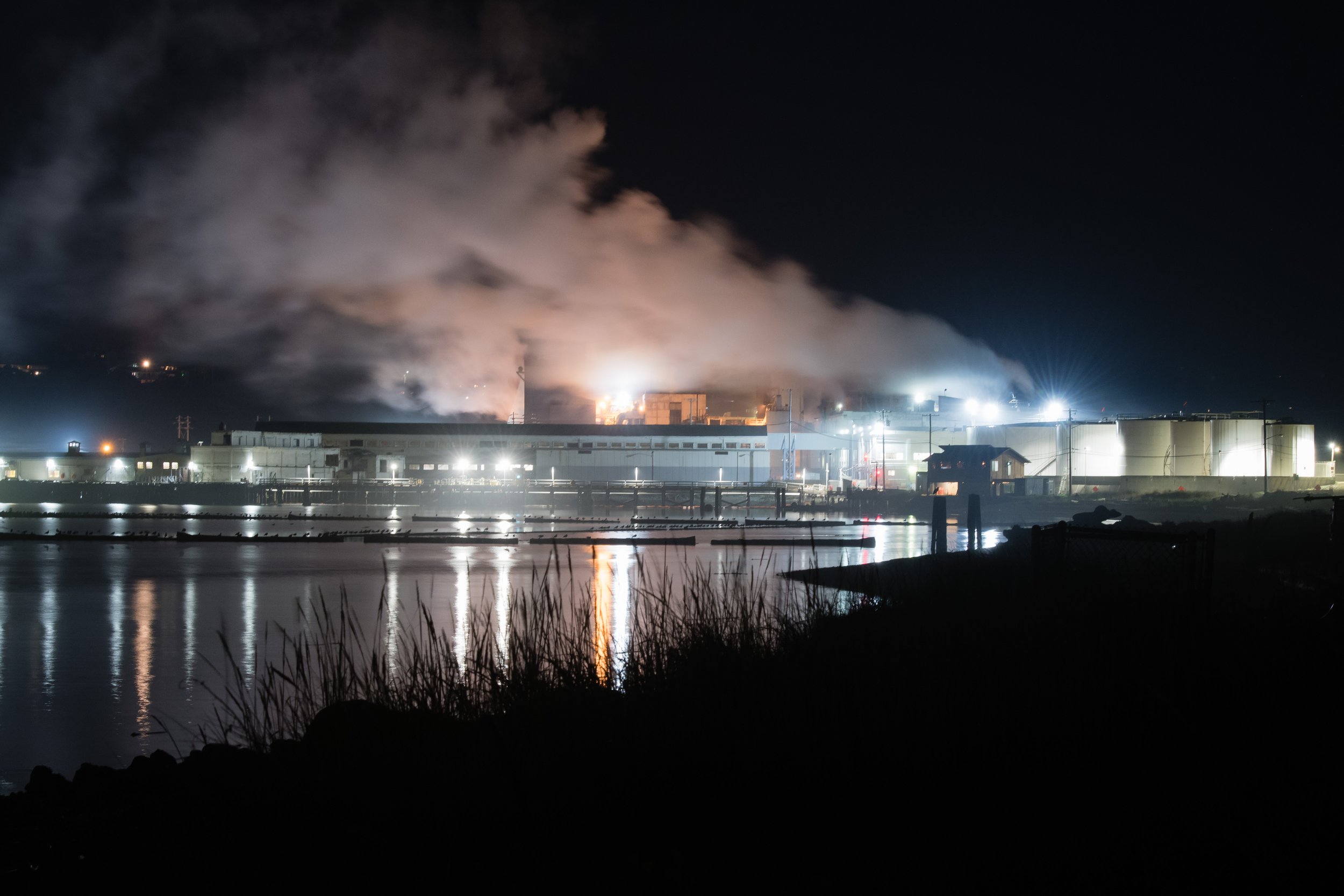
Light pollution in Port Angeles—Photo: Dee Renee Ericks
November—December 2024
Bird Collisions and Light Pollution
by Joyce Volmut

As the miracle of fall migration continues, two things come to mind: bird collisions and light pollution. Although you might wonder why we are focusing on this topic at this time, the answer is simple–bird strikes can occur at any time and lighting becomes more important as we approach shorter days.
As many of you can attest, bird-window collisions kill a staggering number of birds and light can be disorienting to birds. OPAS has tried to address some of these issues through a community science program called Project BirdSafe. Currently the program is concentrating its efforts at Peninsula College in Port Angeles by working with staff and students to identify where bird strikes occur and organizing efforts to make buildings safer for birds.
Why do birds slam into windows in the first place? Birds don’t see the world as mammals do. Birds don’t perceive windows as a barrier. They see reflections in the glass that are deceiving, such as a cloud formation, open green space, or to the sky on the other side. To them this is free territory–something they can fly right through.
Additionally, most birds that are active during the day have eyes on either side of their heads. This gives them a wide field of view, an advantage for detecting predators. But this advantage comes at the expense of depth perception.
Light pollution impacts birds and is also a factor in bird strikes. The night sky is an amazing thing. It is part of our environment shared by both people and wildlife. The cycle of day and night is important for the natural rhythms of all living things, especially for the billions of birds that rely on it to effectively navigate their nighttime migrations.
The use of artificial lighting is another threat to birds, and it has been increasing across cities and in neighborhoods. Why is this harmful to birds? Birds that migrate or hunt at night depend heavily on visual reference to maintain orientation. Interior or exterior artificial light can lure birds into lit areas, causing birds to become disoriented and entrapped, circling in the illuminated zone. As a result, birds can succumb to exhaustion, predation or collision. Nighttime lighting can affect birds throughout the year not just when they are migrating, It does this by illuminating their habitats, grasslands, trees and other crannies where they roost. This can cause birds to avoid habitats essential for their survival and can alter relationships between predator and prey.
Even though cities like Sequim have a “take the dark sky back” light pollution policy, too many residents do not have the proper outdoor lighting on their homes and these outdoor lights glow across neighbors’ lawns and across habitats.
What can we do to keep birds safe? Educate neighbors about the hazards birds face. Apply Feather Friendly® or DIY Acopian BirdSavers to windows that are reflective; ensure that all exterior lighting is properly shielded and aimed downward. Join the BirdSafe Community Science Program and make birds safe across neighborhoods.
For more information be sure to visit the Project BirdSafe page.