

Rufous Hummingbird—Photo: Mick Thompson
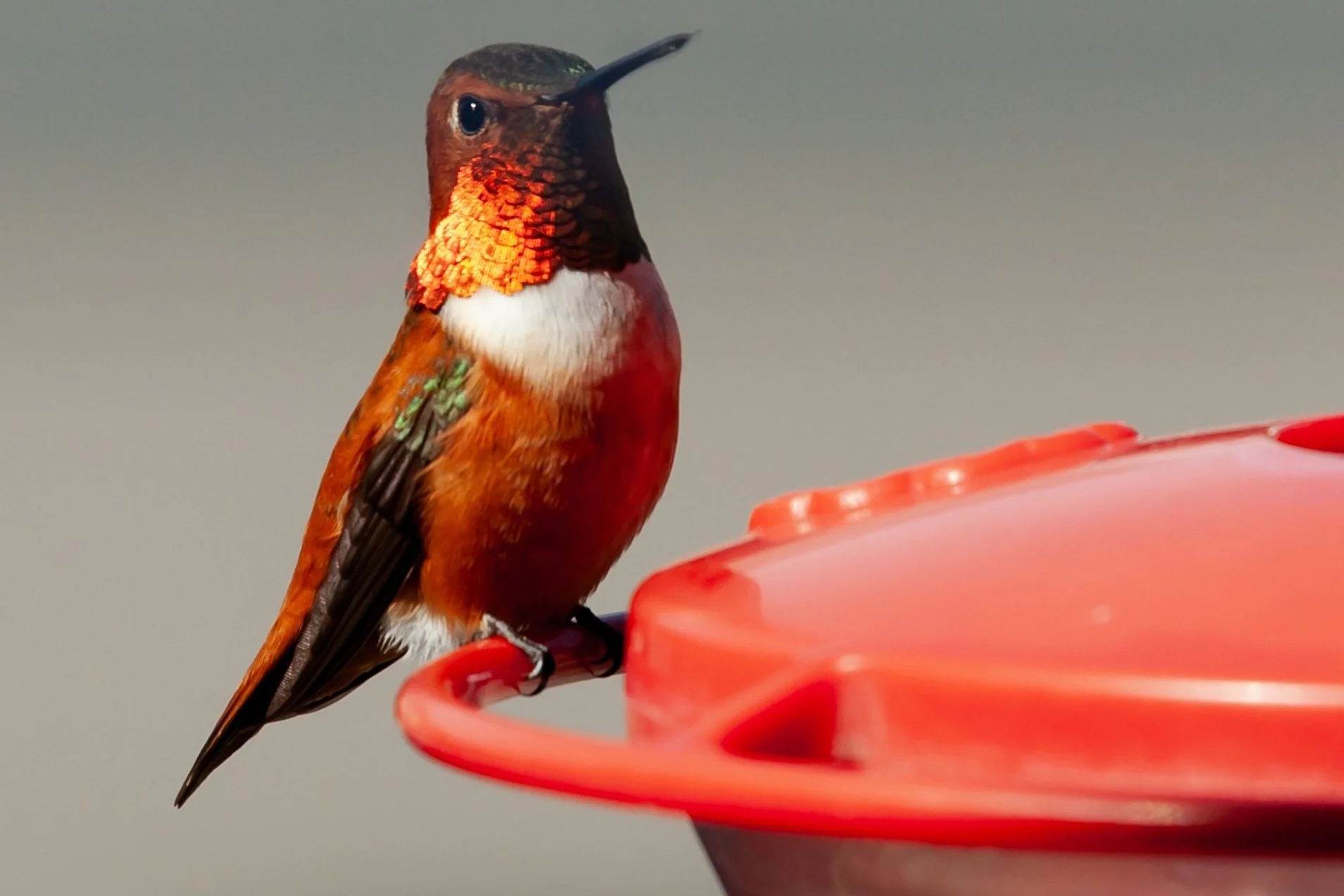
Photo: Jane Nicholas
Where in the World is Rufous?
By Jane Nicholas and Ida Domazlicky
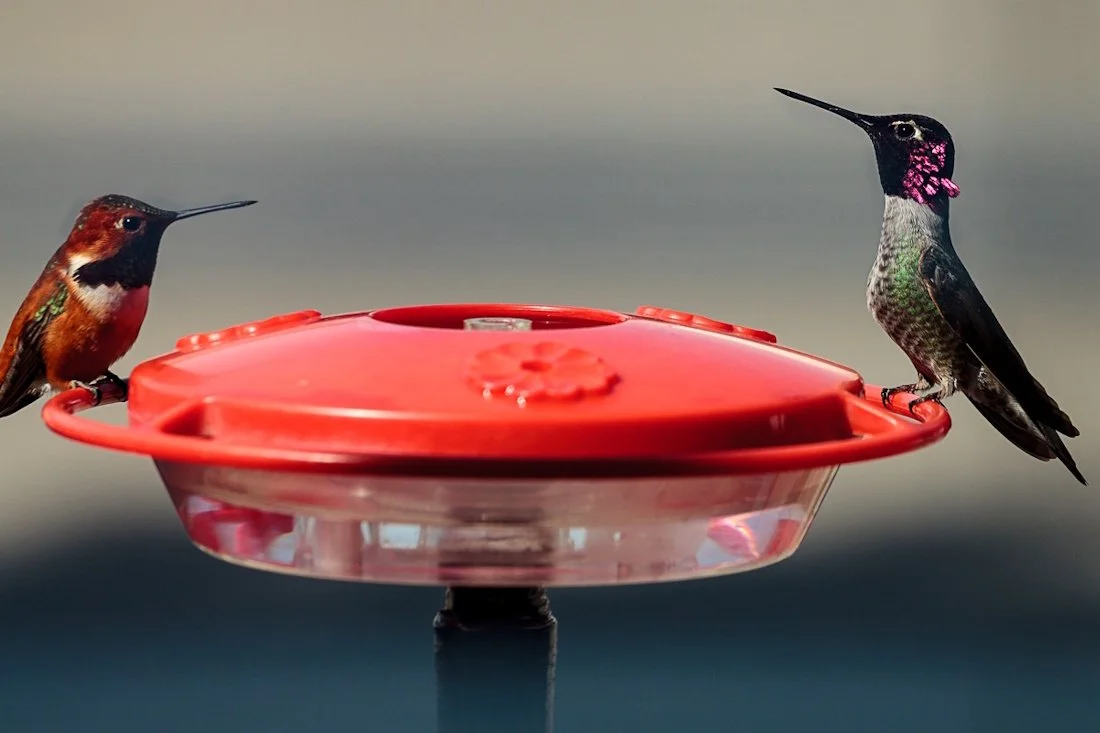
Photo: Jane Nicholas
With so many congenial Anna’s Hummingbirds visiting our feeders now, it can be easy to forget about our other hummingbird, the Rufous. While the Anna’s certainly aren’t missing those feisty rascals that hog the feeders in summer, I long to see those bright, copper‑penny feathered friends again. But where are they?
You’ll be happy to know that most are enjoying the warm, sunny climes of southwestern Mexico. These tiny three-inch fliers make one of the longest migrations of any bird. Some travel up to 4,000 miles from Alaska to their winter home—that’s 78,470,000 bird‑body lengths! Rufous Hummingbirds can live up to eight years, meaning some individuals make that arduous journey as many as sixteen times.
They aren’t heading south for the beaches; they make the trip for the specialized—but threatened—nectar plants and tiny insects that thrive in that climate. It’s no coincidence that Rufous Hummingbirds are listed as “Near Threatened.”
I find it interesting that Anna’s begin nesting in late winter, so their broods are well on their way to maturity by the time the Rufous return in spring. The Rufous’ nest is similar to the Anna’s, and they have been known to reuse the same nest the following year. About a month after hatching, the fledglings join their parents in seeking out high‑calorie, protein‑rich food to fuel their long migration southward in late summer.
It amazes me that this three‑inch‑long bird travels so far through so much weather and danger, yet often returns to the exact same location year after year. In November of 2014, I was still living in southeast Missouri, where we are used to seeing only one hummingbird species—the Ruby‑throated—which arrives in spring and migrates to Central and South America for winter. I had a habit of leaving my feeder out until Thanksgiving, just in case a late traveler needed a pick‑me‑up.
The morning after Thanksgiving, I had a surprising visitor: a male Rufous Hummingbird. It was remarkable because they are rarely seen in Missouri at all, and even more remarkable that he stayed until late January. Amazingly, he survived serious ice and snowstorms by hunkering down in the bushes next to our house. We kept his feeders thawed by wrapping them with heat tape. He endured our bitter cold nights by going into torpor, waking at dawn to take in some nectar before hunting for other food.
We were able to have him banded by a very enthusiastic birder who drove 100 miles to capture the Rufous, record his vitals, and attach a tiny band. Many other birders came to the house that winter to enjoy him and add him to their lists.
The next October, he returned! He resumed the same winter home and routine from the previous year. The numbered band confirmed it was the same Rufous. This time he stayed until February. We moved to Washington that July, and although we left feeders and contact information for others to watch for him, he was never reported again.
I felt privileged to host him for those two winters and to see firsthand how tough the Rufous can be. I gained so much respect and admiration for these tiny, strong, and beautiful hummingbirds. Every sighting here is a delight for me. I still find myself looking closely for a tiny leg band, just in case.
Note: In January this year, a Rufous Hummingbird was spotted near Carlsborg and another on Marine Drive in Sequim.
In the photo with two hummingbirds (taken in Sequim), you can see the differences in size and color between the Rufous on the left and the Anna’s on the right—a rare instance of these two species sharing a feeder.