
Reflective Home Windows—Photo: Dee Renee Ericks
Bird Collisions With Glass
SOLUTIONS For HOME
Western Tanager—Photo: Jim Gift
WHY BIRDS HIT GLASS
Birds do not perceive glass like humans do. Collisions happen when birds fly towards natural reflections in window glass, where they see clouds, sky, or vegetation. Birds don’t see glass as solid. Birds see reflections as real habitat, and they try to fly through it.
Reflections in window glass of nearby habitat can confuse birds—Photo: Dee Renee Ericks
Researchers estimate that up to 1 billion birds die every year in the United States alone from colliding with a window—this makes window collisions one of the top three threats to wild bird populations, third only to habitat destruction and cats.
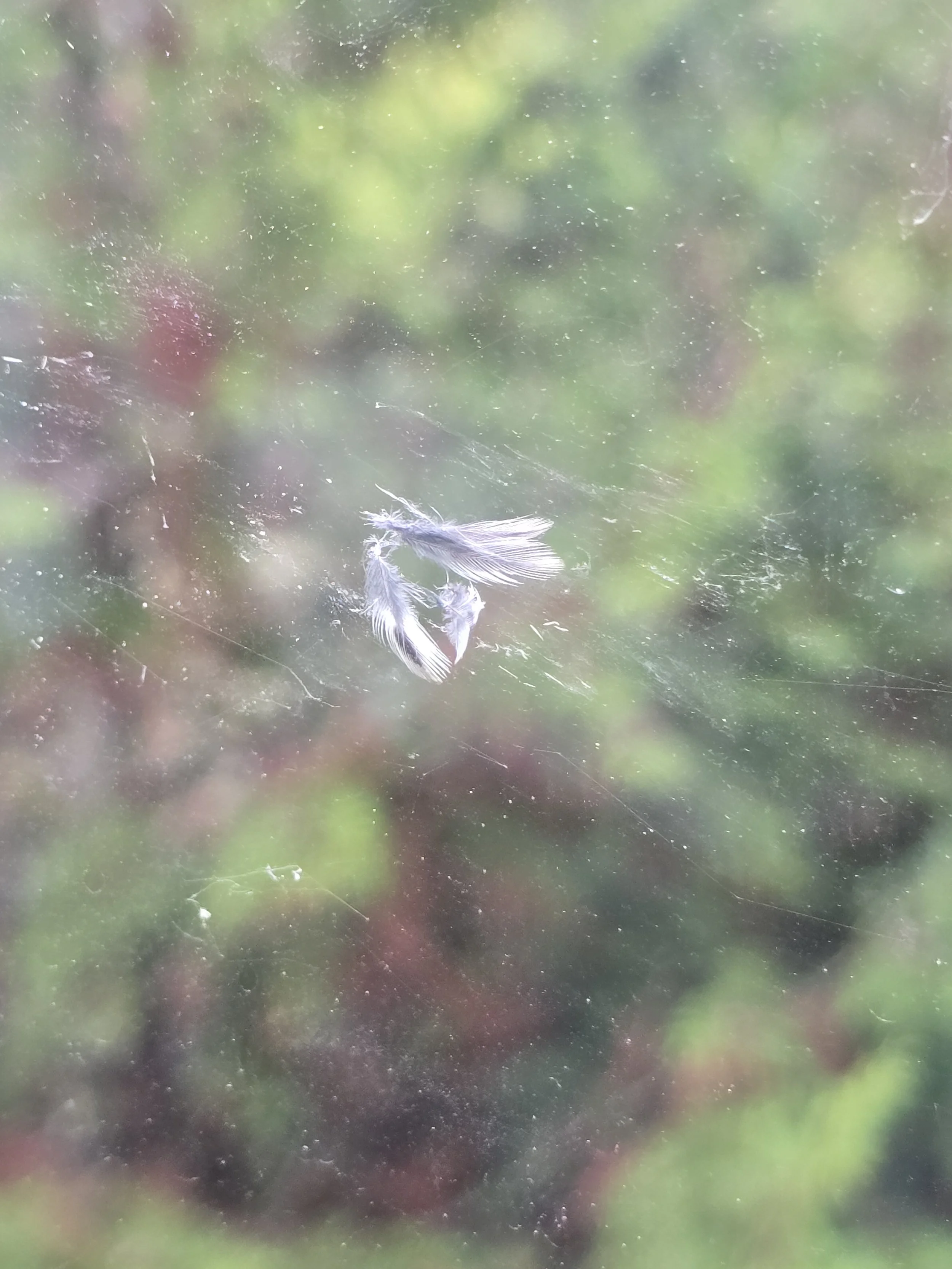
Collisions can occur at any window, any time of day and year. Problems peak during spring and fall bird migration. Research shows that 54-76 percent of window collisions are fatal—Photo: Dee Renee Ericks
Songbirds are often attracted to trees and plants near buildings. During the daytime, birds collide with windows because they see reflections of the landscape in the glass (e.g., clouds, sky, vegetation, or the ground); or they see through glass to perceived habitat (including potted plants) or to the sky on the other side. At night, birds are drawn toward lights and lit buildings where they often become disoriented and face higher risk of collision, light-entrapment, and predation.
Birds do not recognize glass as a solid object. Glass is a problem because it is confusing for birds as an invisible obstacle and as a reflective surface. It is an indiscriminate killer, culling the healthiest members of a population as well as the weakest. To make matters worse, many of the victims are songbirds whose populations are already in decline.
.
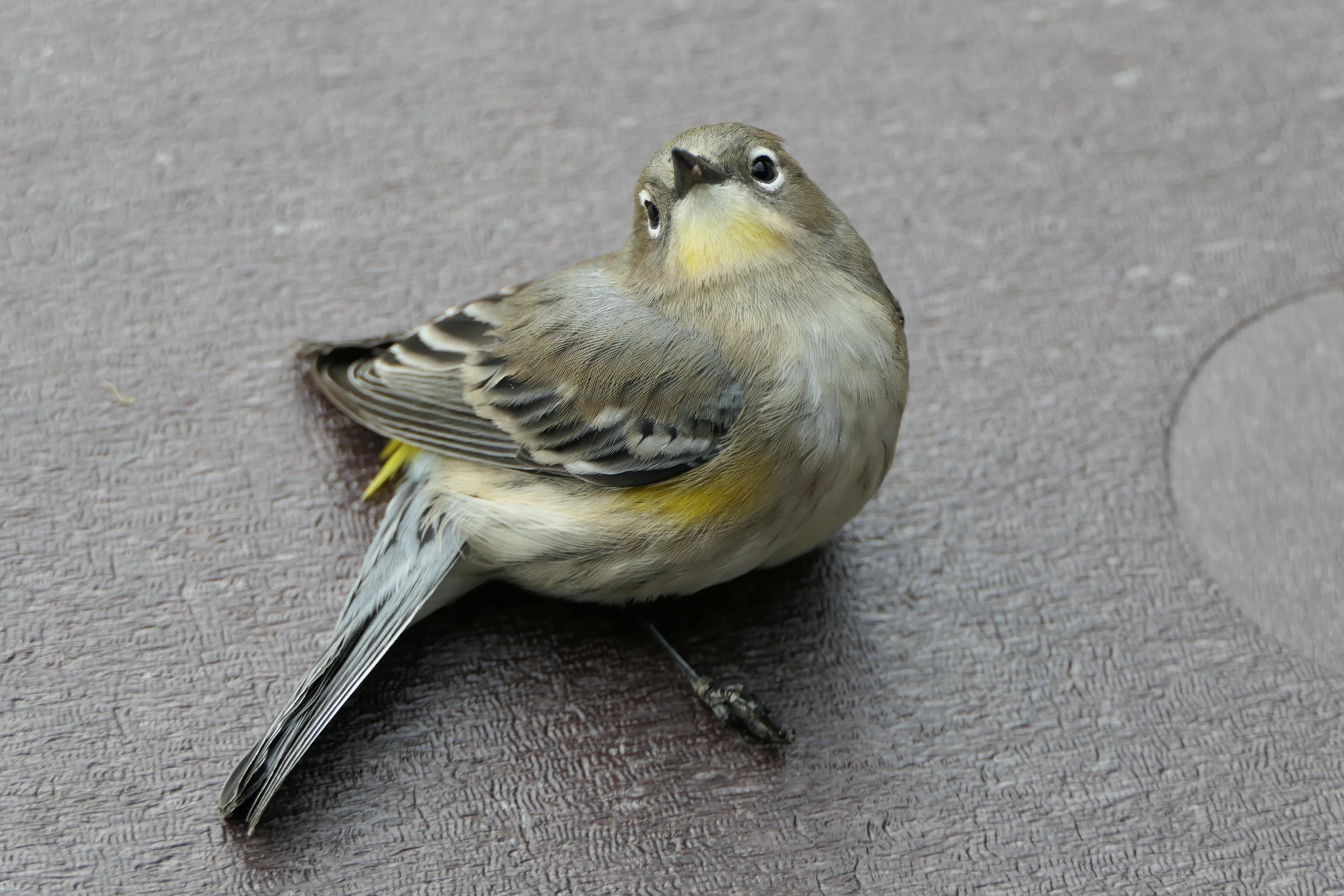
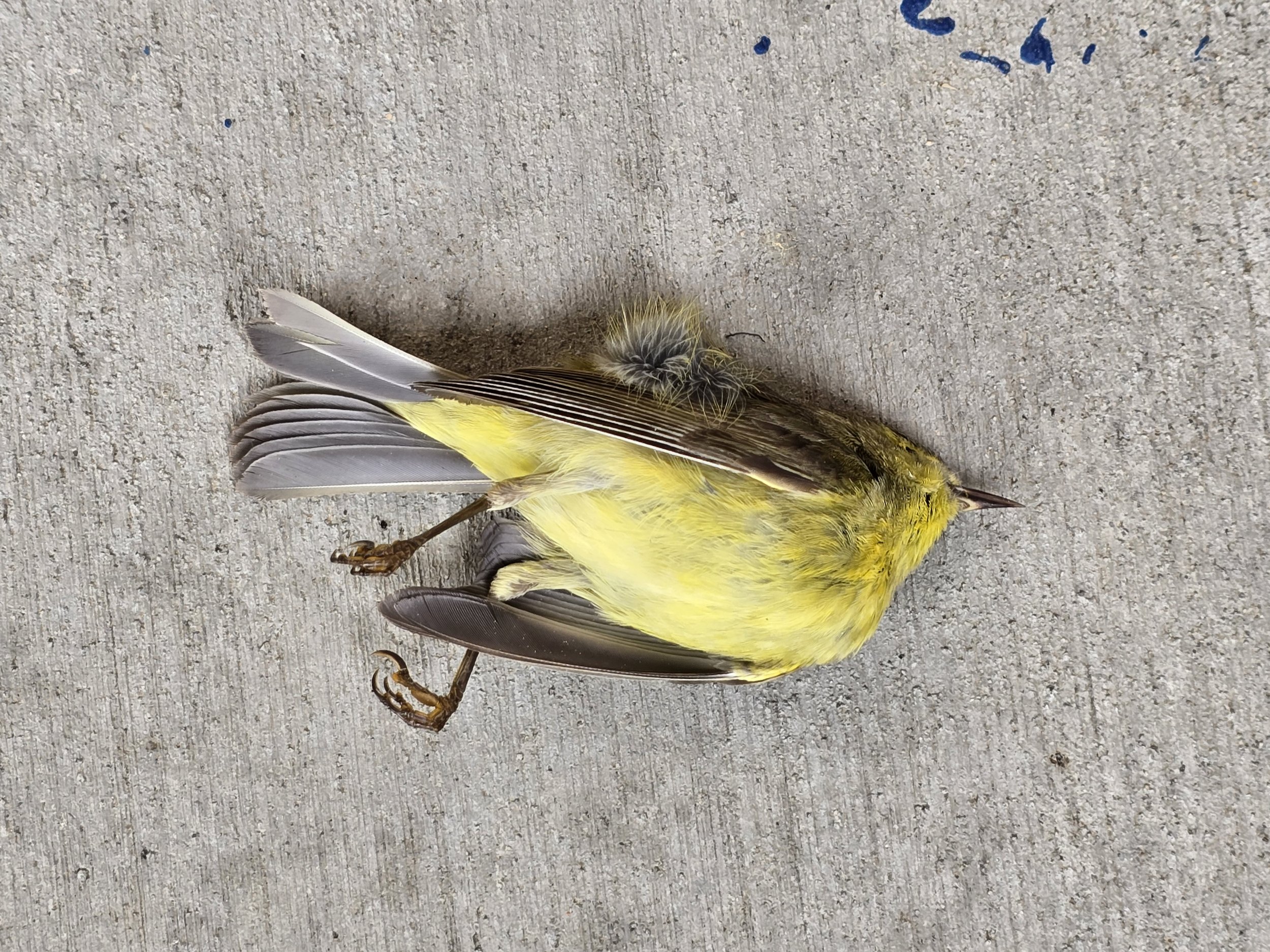
Many birds that seem fine following a window collision may later die from related injuries. Birds that fly away often suffer concussions and internal injuries.
Orange-crowned Warbler—Photo: Dee Renee Ericks
Bird-building collisions can happen at any time of the day and year, but tend to increase during migration and when young birds start flying. Therefore, the most crucial times for these measures are during spring and fall migration and in the breeding season.
WHAT YOU CAN DO TO HELP
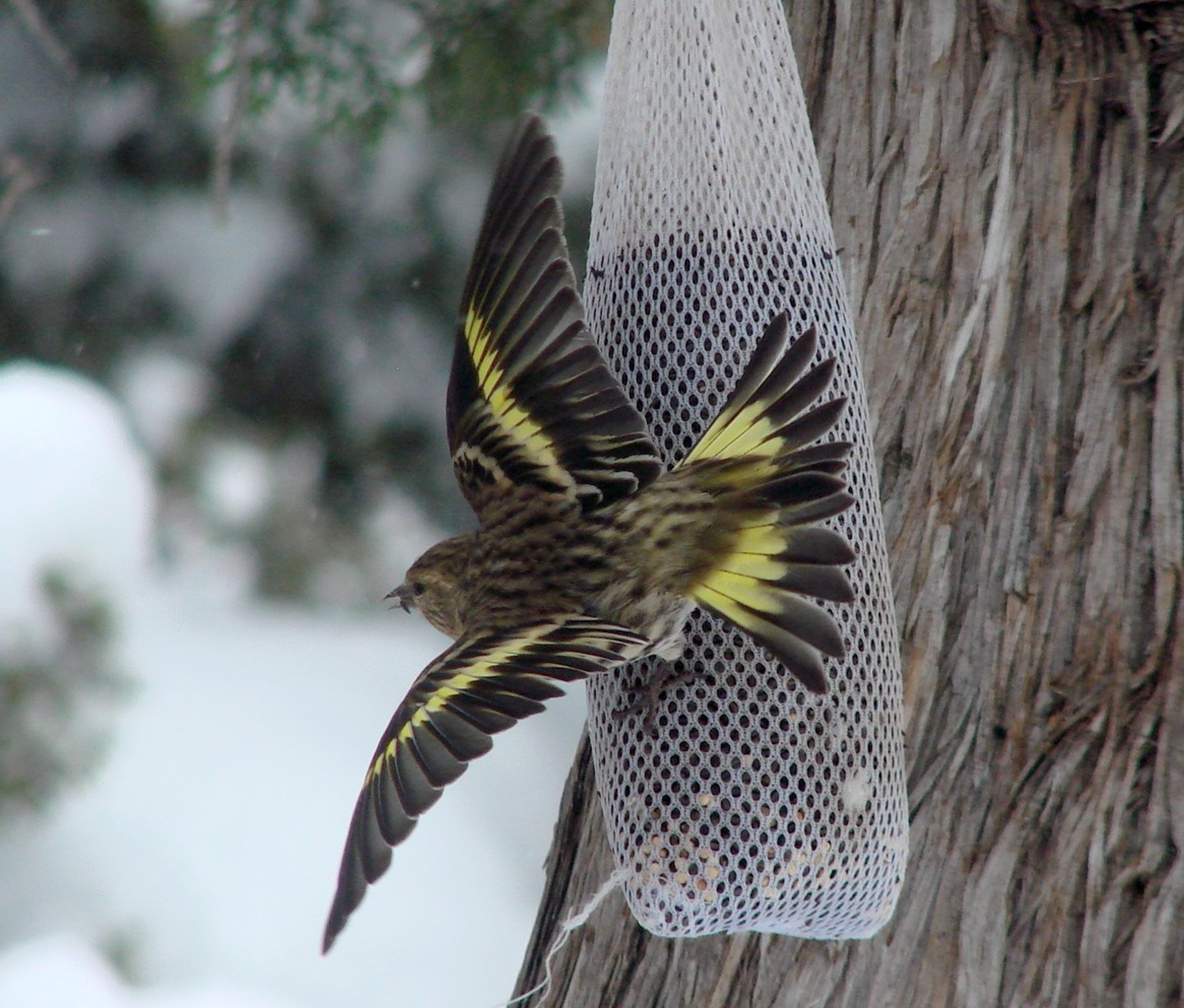
MOVE BIRD FEEDERS AND BATHS far away from (>30 feet) or close to (<3 feet) windows. Some feeders suction cup right onto the glass—Photo:Linda Butler/Audubon Photography Awards

MOVE PLANTS AWAY FROM WINDOWS
Birds see house plants through the glass and try to fly to or through them—Photo: courtesy Nathan Fertig, Unsplash

LIGHTS OUT!
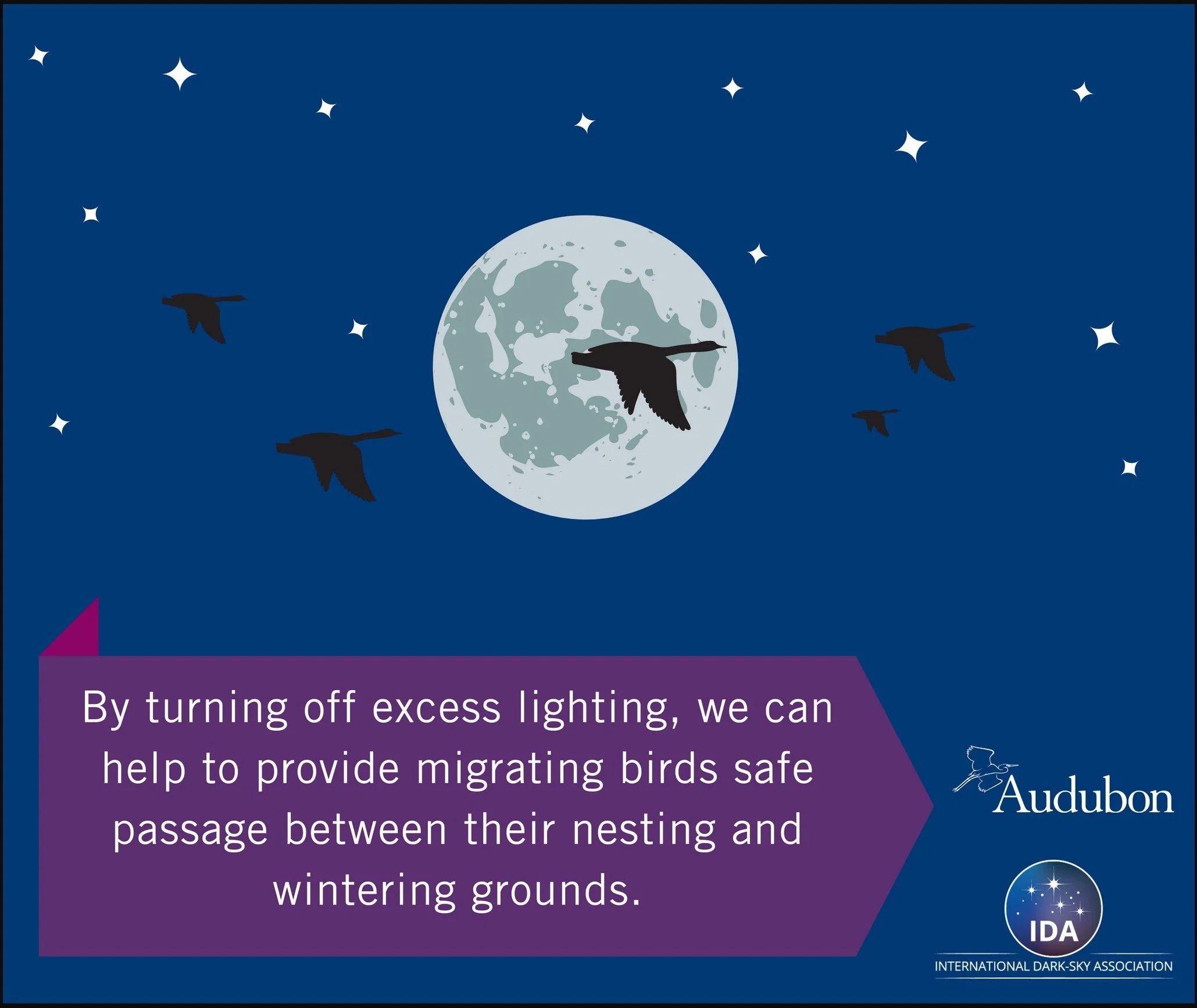
Reduce exterior night-time lighting. Artificial lights at night divert and disorient migrating birds leaving them vulnerable to building collisions. About 80 percent of migratory birds in North America migrate at night.
MAKE YOUR WINDOWS MORE VISIBLE TO BIRDS
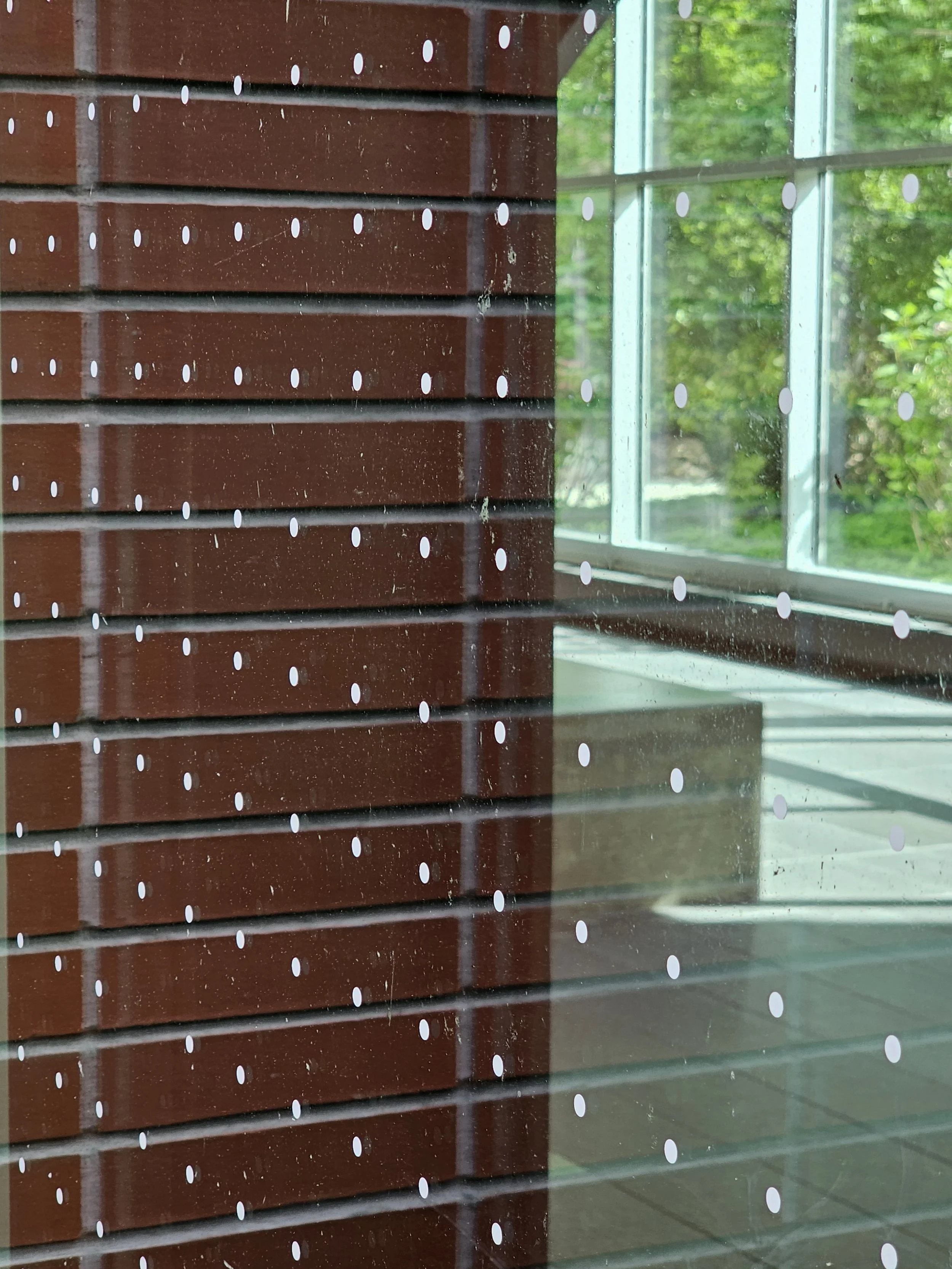
The key to making glass bird-friendly is to create a visible pattern that breaks up transparent or reflective areas of glass. Birds need strong clues on or around glass to warn them that it’s there—Photo:Dee Renee Ericks
Place Visible Patterns on Outside of Glass
DIMENSIONS FOR SUCCESS: Birds will avoid glass if the markings are tightly grouped, realizing they cannot fit through the transparent or reflective areas of glass.
Vertical stripes or decal placement should be minimum ¼ inch wide with a maximum spacing of 4 inches.
Horizontal stripes or decal placement should be at least ¼ inch wide, maximum spacing of 2 inches.
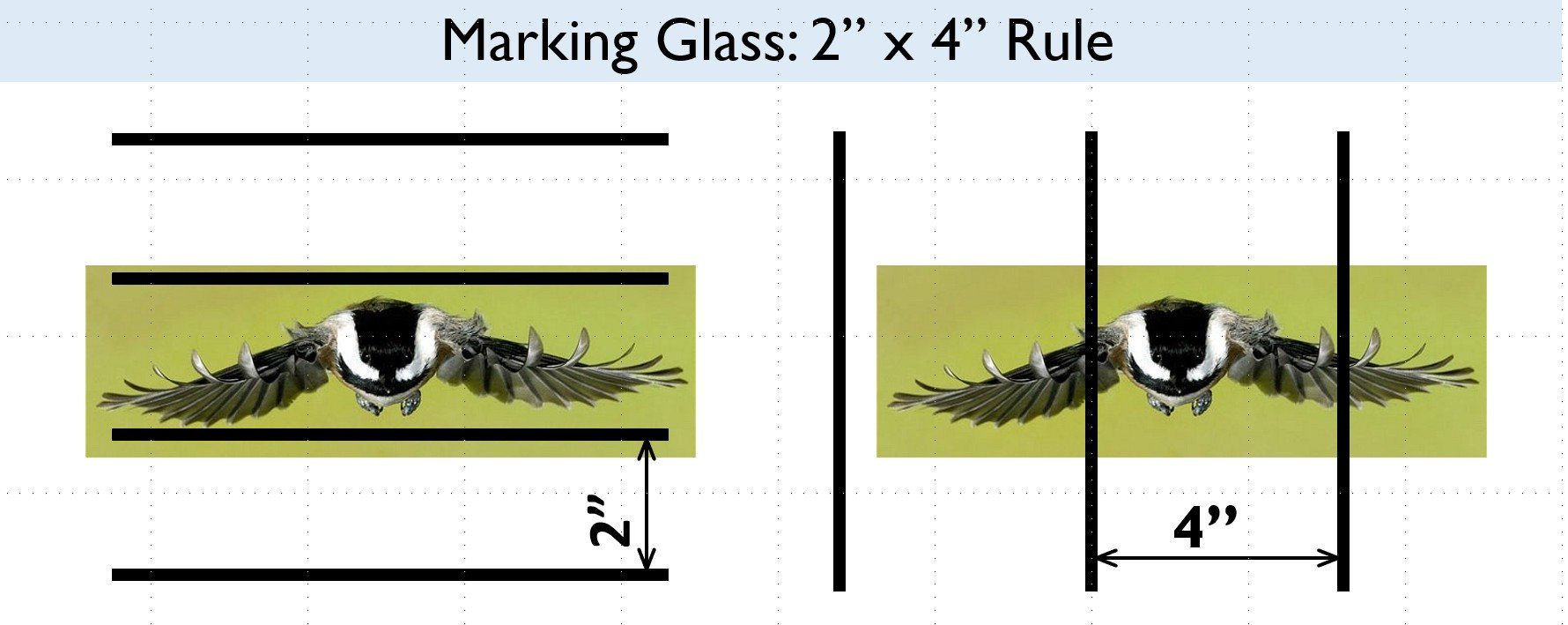
Tests have shown these dimensions to be the most effective at preventing bird strikes.
tapE, Decals and Window Film
An easy way to apply the correct spacing of markings across your window:
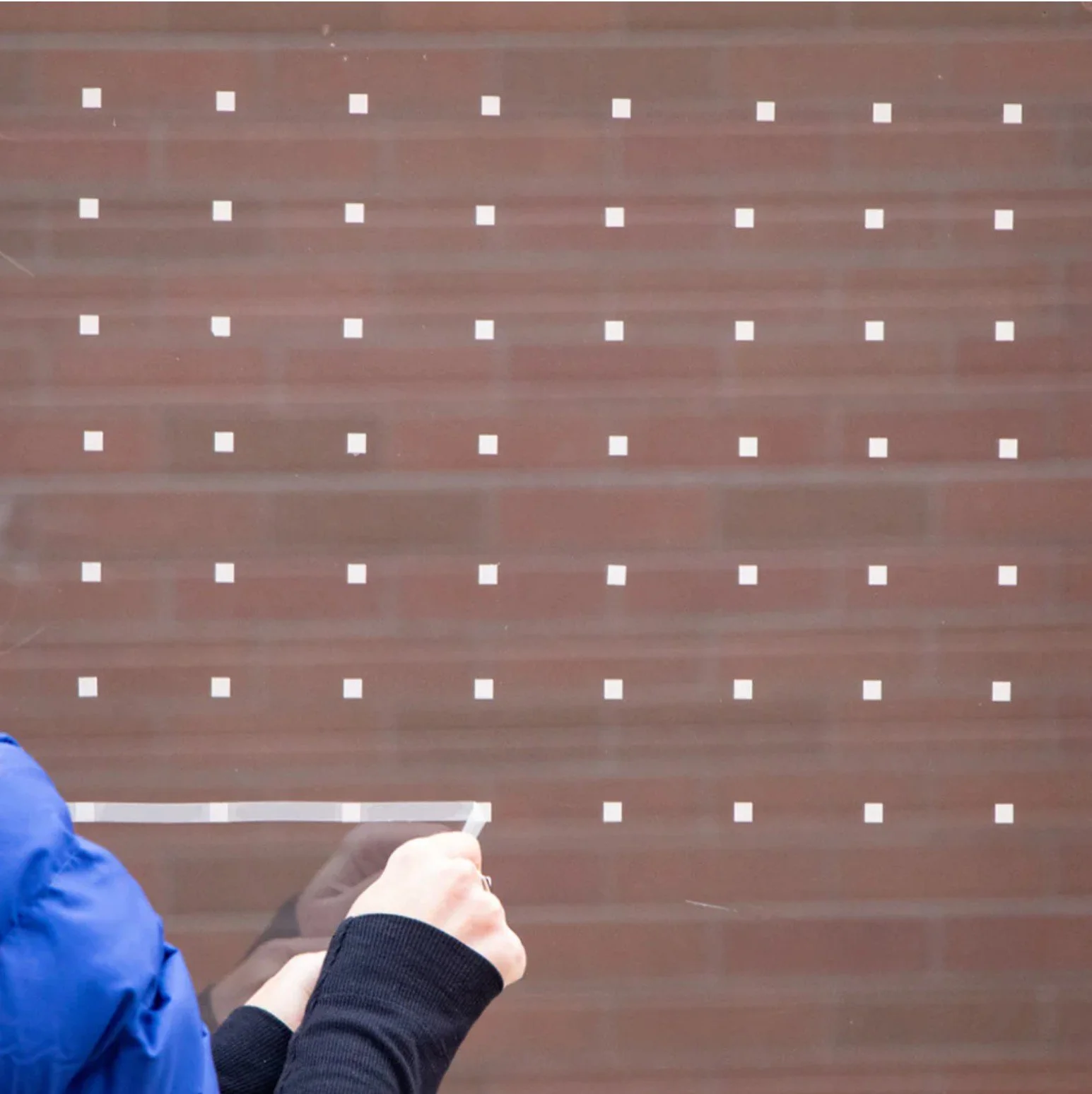
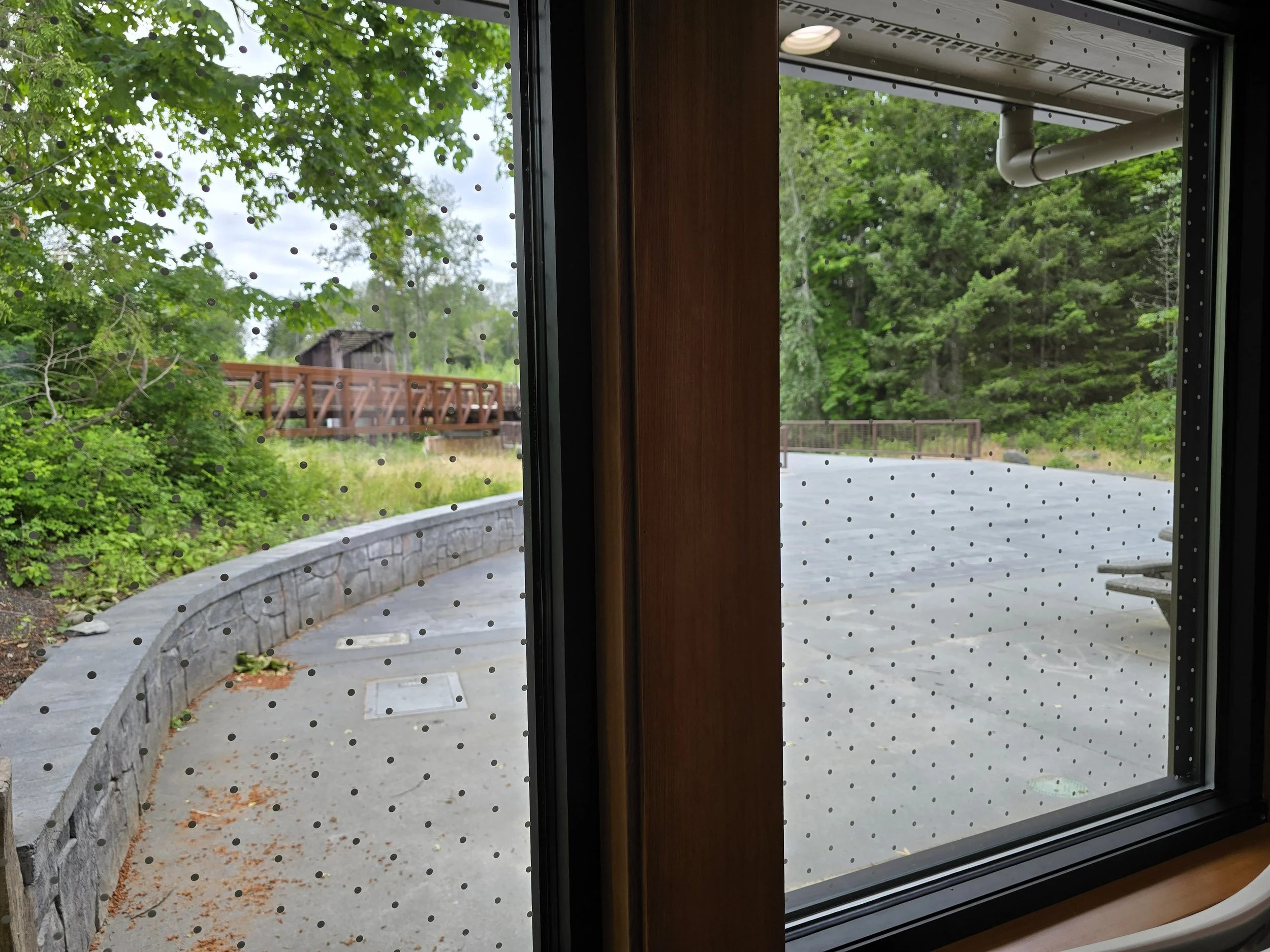
FEATHER FRIENDLY® dot pattern bird tape. The markers are easy to apply, readily apparent on the outside, but are obscure gray markers looking from the inside, out. Long lasting, upward of 15 years—Photo: featherfriendly.com
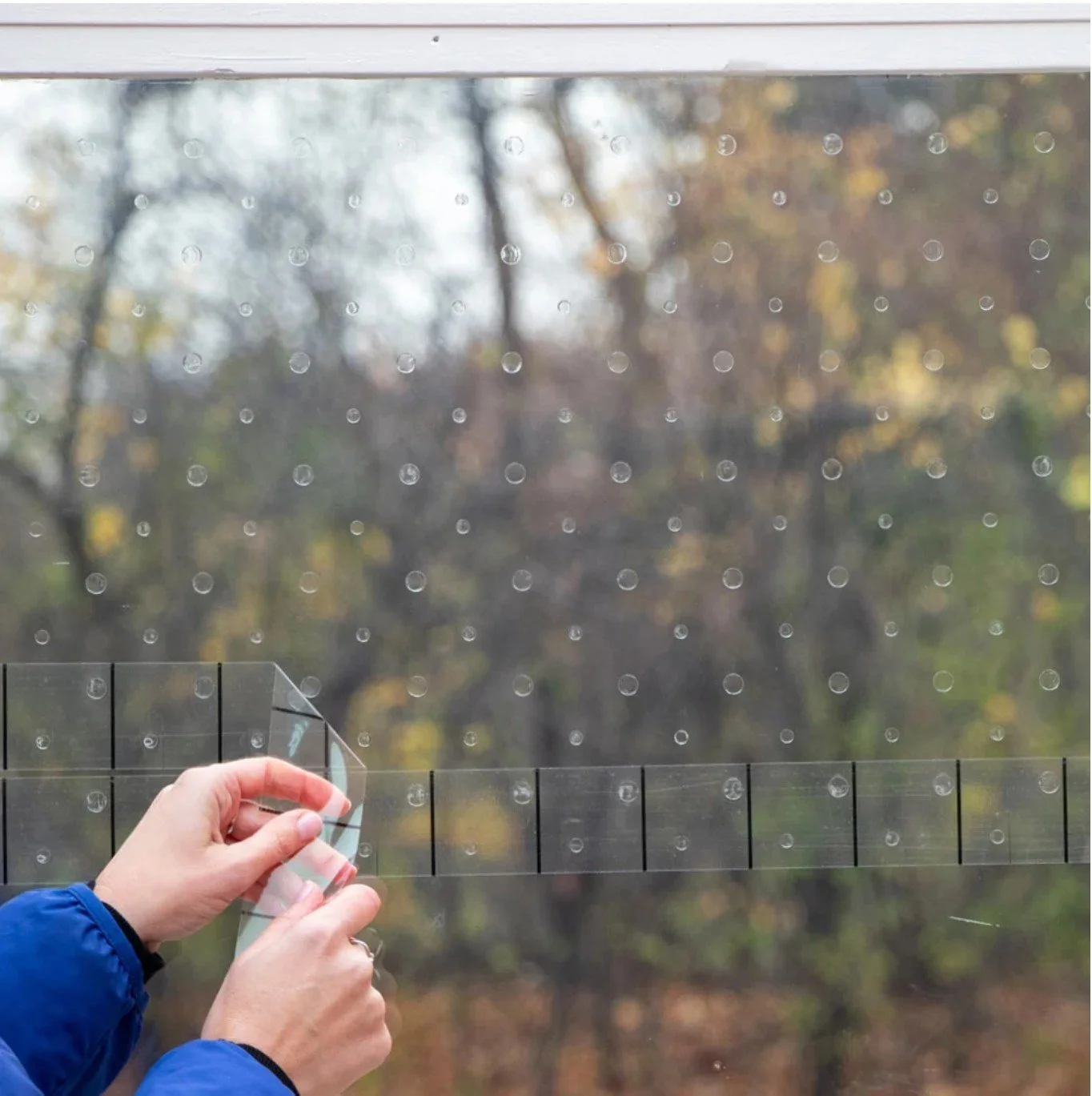
BIRD DIVERT uses ultraviolet (UV) reflective technology that takes advantage of most birds’ ability to see in the UV spectrum, a capability humans lack. The markers create a pattern birds recognize as a barrier, while remaining practically undetectable to the human eye—Photo: featherfriendly.com
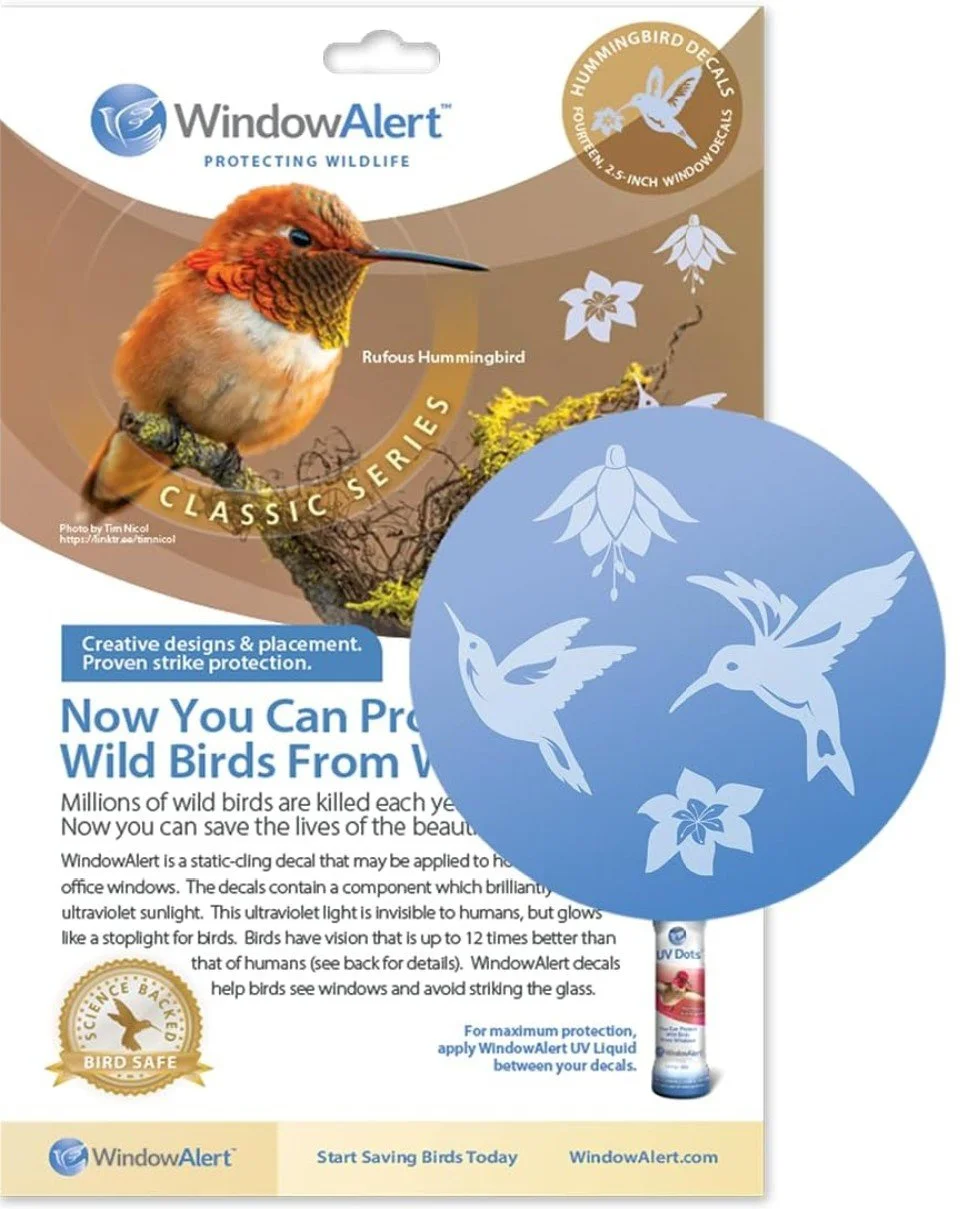
WINDOW DECALS work if they are placed on the OUTSIDE of a window, and spaced 2 to 4” apart. Cover the entire window. For the best protection, pair with UV Liquid between the decals. Decals will loose UV effectiveness, require regular replacement and tend to discolor with time.
BIRD TAPE- CollideEscape™ bird tape and ABC Bird Tape are options, and are effective when spaced closely (2”to 4”) apart. Make your own patterns and design.
WINDOW FILMS- Collidescape, Artscape and Solyx all offer window films in a variety of patterns.
Hawk silhouettes do NOTHING to deter birds collisions.
Cords, BLINDS, Screens and creative drawing
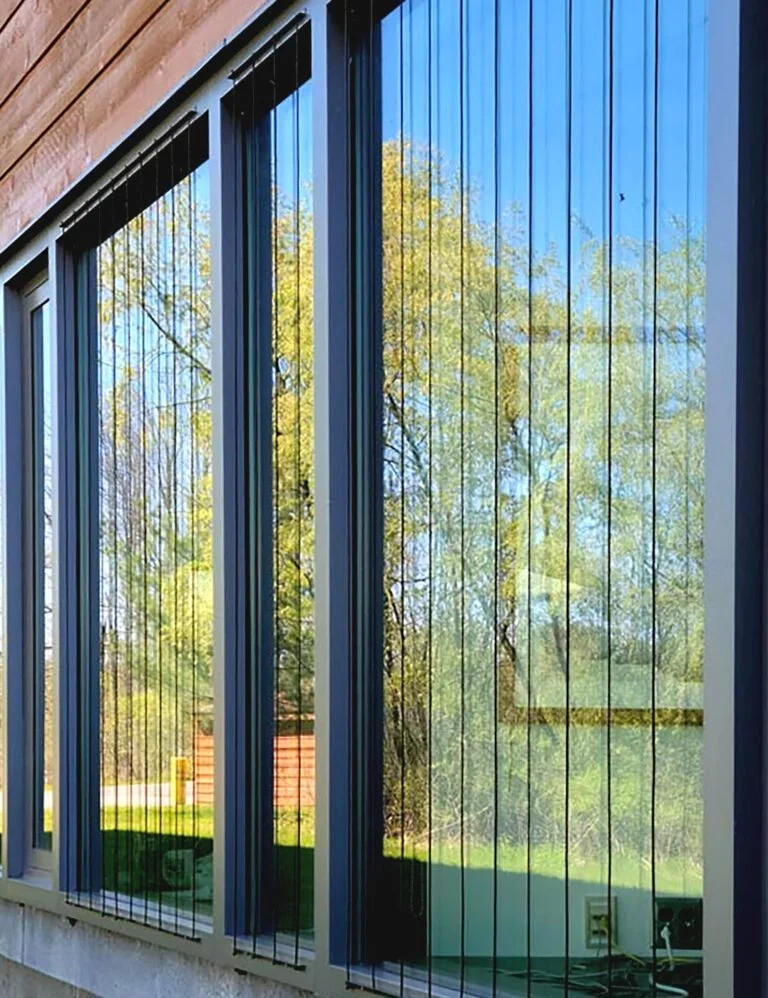
CORDS
Hanging cords, strings or ribbons in front of your windows can be effective and unobtrusive.
Acopian BirdSavers™are closely spaced cords that hang down over windows. They do the work of tape or decals but are easier to install. Make them yourself (DIY), or order custom-made based on the size of your window(s)—Photo: Cornell Lab
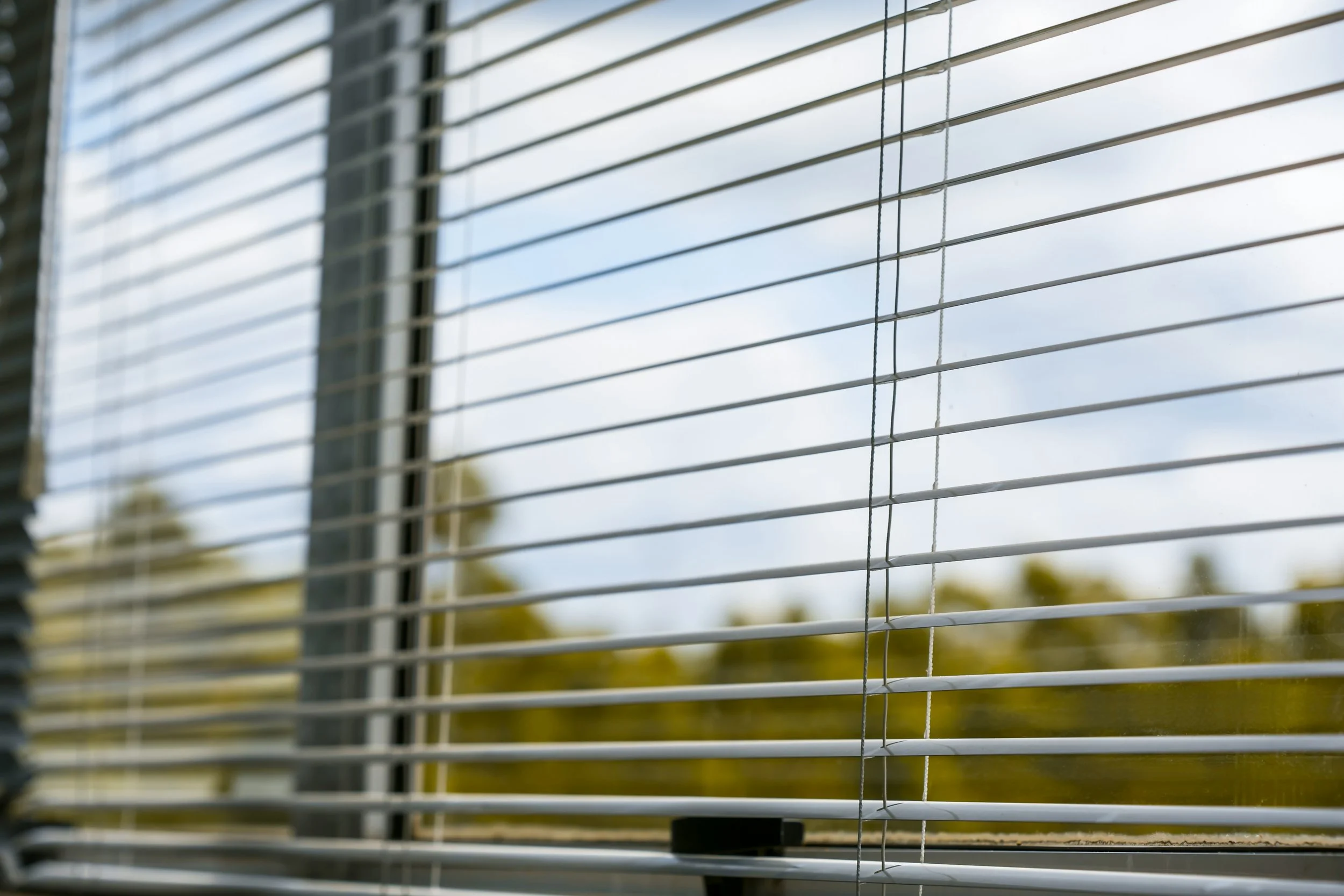
CLOSE BLINDS
Blinds, shades or curtains can help break up exterior reflections—Photo: courtesy Ruan Richard Rodrigues, Unsplash
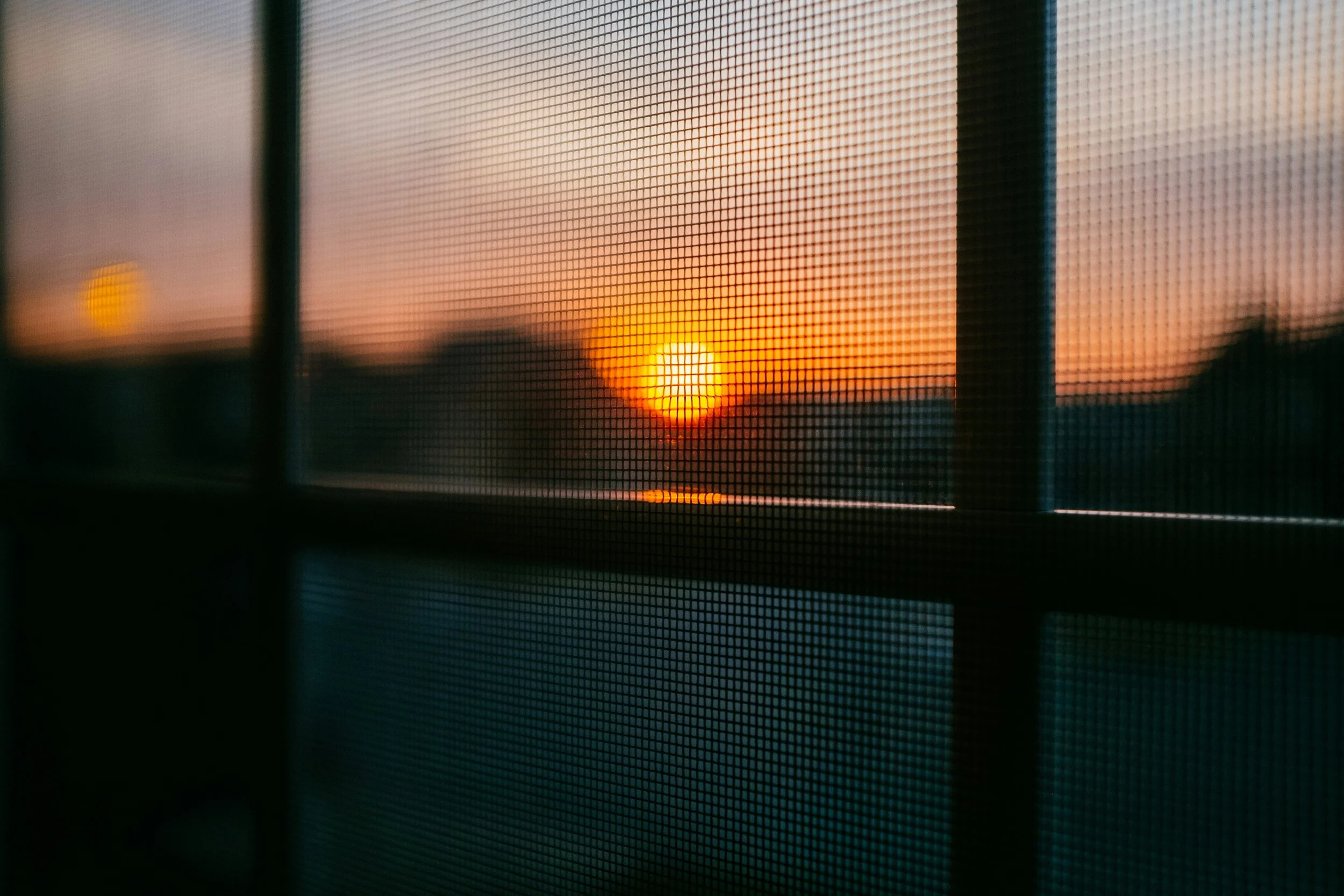
INSTALL EXTERNAL SCREENS External insect window screens reduce bird collisions by minimizing window reflections and alerting birds that windows are barriers—Photo: courtesy Darrin Henein, Unsplash
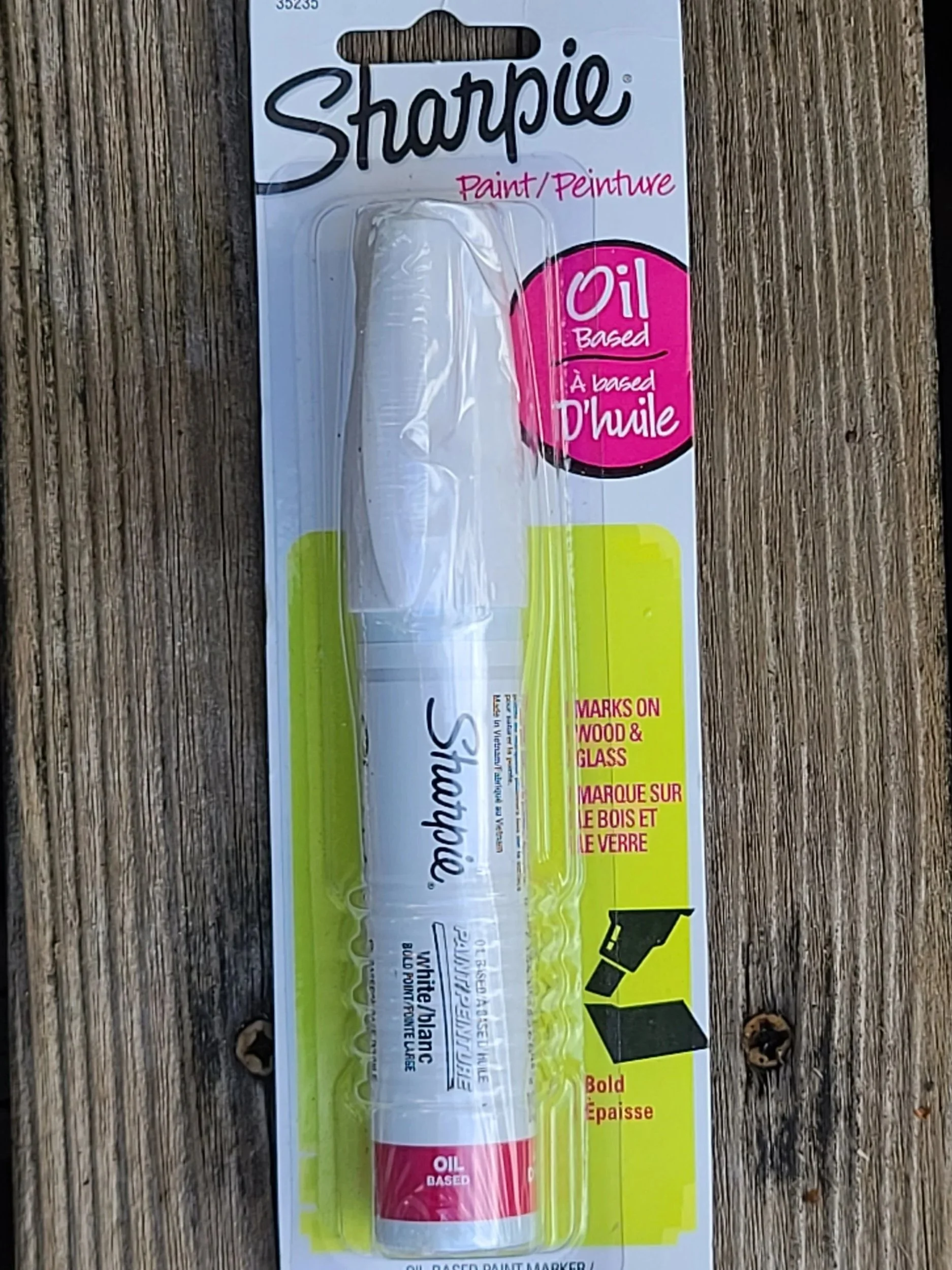
DRAW PATTERNS ON GLASS
Create patterns on exterior surface of reflective windows. Multiple markings 2” to 4” apart is optimal. A bar of soap or an oil-based Sharpie are excellent markers on glass—Photo: Dee Renee Ericks
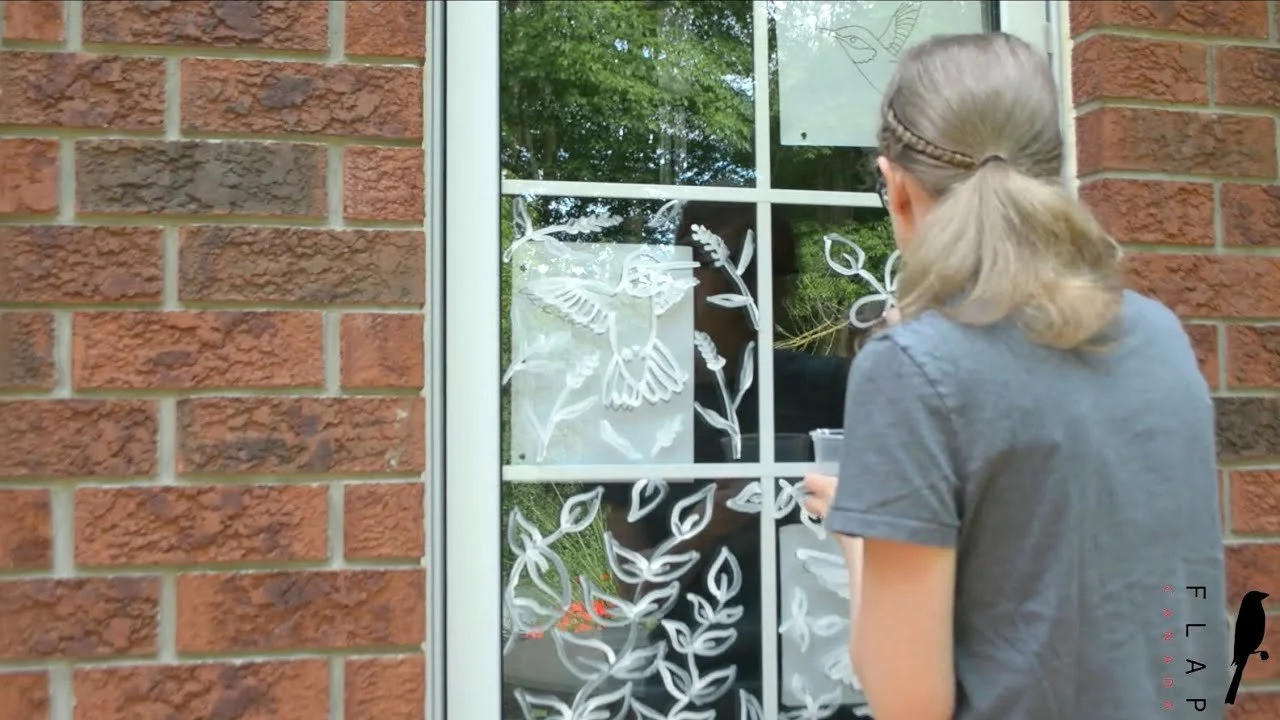
TEMPERA PAINT Painting the outside of your windows with washable, non-toxic tempera paint is an easy (and fun) way to stop birds from hitting your windows—Photo: FLAP Canada
For more information, see the Bird Collision Prevention Alliance.
A local source for some of the products mentioned above is Wild Birds Unlimited® located in Gardiner, Washington. They currently carry the UV paint pens called WindowAlert® UV Liquid, WindowAlert® ultraviolet decals, and Feather Friendly® tape. Contact them at (360) 797-7100 to check for availability.
The Dungeness River Nature Center in Sequim now carries Feather Friendly markers, Window Alert decals and UV Liquid for smaller window projects.
(Note: No window product can guarantee elimination of window collisions. Results will vary depending on local bird populations, landscape conditions, product used, and building design. We are providing these product suggestions as a convenience, and there are many more that may work in a similar way to suit your needs.)